The Future of Ukrainian Subtitling and Voiceover in E-learning
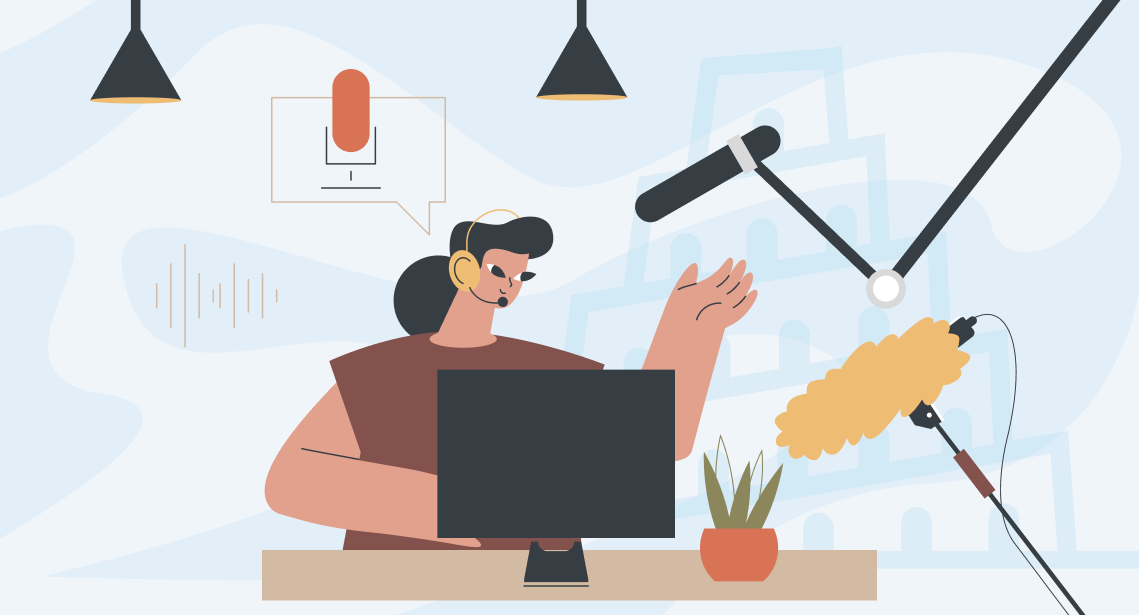
Over the past decade, e‑learning has become an essential part of education. Recent global events—the Covid-19 pandemic and the Russian invasion of Ukraine—have shown that it is an important tool which helps Ukrainians access resources without sitting in classrooms. However, a lot of educational content that could be useful is created in English. This highlights the need for accurate Ukrainian subtitling and professional voiceover. The more properly translated content there is, the higher the level of educational accessibility.
Why subtitling and voiceover are crucial in E-learning
Video content plays a major role in modern e-learning. Many Ukrainian learners rely on online lectures, tutorials, and webinars because the video format itself improves comprehension. Visuals and spoken explanations make e-learning effective. They help learners see and hear the material at the same time, which improves understanding of complex topics.
When Ukrainian subtitles are added, the effect is even stronger. Learners can read key points while listening. They can pause and review difficult parts. Subtitles reinforce terminology and support better retention.
When visuals, audio, and subtitles work together, comprehension becomes much easier. The overall quality of learning increases significantly.
Best practices for Ukrainian subtitles
According to an article on neurolinguistic and cognitive aspects of subtitle translation published in the journal BRAIN. Broad Research in Artificial Intelligence and Neuroscience, translating subtitles requires intense cognitive effort. The brain simultaneously processes visual and auditory information. Language comprehension, memory retrieval, and decision-making are all activated. Luckily, there are general guidelines that help translators during this complex process.
Timing and readability
Subtitles should stay onscreen long enough to be read comfortably. They should not cover visuals or distract from audio. A good rule of thumb is to keep subtitles up to 42 characters per line. Lines should generally be limited to one or two lines maximum.
Lines should be broken thoughtfully—after punctuation or before conjunctions—so that phrases remain intact and natural to read. Using a bottom‑heavy pyramid structure (more words on the second line than the first) helps reading flow smoothly.
Reading speed also matters. For adult programs, subtitles should not exceed 17 characters per second; for children’s content, the limit is 13 characters per second. For content with viewers who are deaf or hard of hearing, these limits can be slightly higher.
Moreover, it is recommended to use a legible font with high contrast between text and background. White text on a dark background is standard.
Common errors to avoid during E-learning translation process
- Do not use literal translations that distort meaning.
- Avoid overcrowding subtitles with too much text.
- Do not split sentences awkwardly across lines.
- Make sure repeated words are translated only once.
- Do not ignore on-screen text or sound effects if they are important.
- Follow rules for italics, punctuation, and numbers carefully.
Subtitles that break these rules make comprehension harder.
Ukrainian voiceover tips
Professional voiceover is another key element in e‑learning. Research shows that learners retain 25–60% of information delivered through audio, compared to 10–20% from text alone, meaning good voiceover directly improves retention.
Choosing the right voice
For e‑learning course translation, the voice must fit the content and learners’ expectations. A calm, clear, and neutral voice supports focus in technical or academic courses. More informal or motivational material benefits from a warmer, more engaging tone.
The speaker should be a native Ukrainian voice actor with correct pronunciation and natural intonation. Clear articulation is essential, especially in technical content. Even small accent errors can distract learners and reduce credibility.
Recording techniques and delivery
Recording should take place in a quiet, acoustically treated space. Even slight background noise can distract learners and break concentration. A professional microphone and audio technology help capture a clean, natural voice without distortion.
Raw audio is never enough. It needs careful editing and mastering. Background noise is removed. Volume is balanced. Unnecessary pauses and distracting breaths are cleaned up. The result is smooth, steady sound that feels comfortable on headphones, laptops, or mobile devices.
Final files are usually delivered in WAV for maximum quality or MP3 for flexibility and smaller size. Both formats integrate easily into video platforms and learning management systems.
Case studies of successful E-learning localization
Modern platforms make e-learning translation faster and more collaborative. They combine subtitling, translation, and voiceover tools in one workspace.
One leading example is CaptionHub. It is a cloud-based platform used by teams worldwide to translate, subtitle, and prepare scripts for video content. The system supports automated transcription and machine translation, which helps reduce turnaround time. TED, for example, uses CaptionHub to localize its educational videos.
Such platforms help course creators and translators work faster and more accurately. They simplify subtitle editing, version control, and file export. As a result, learners receive clear, well-localized online lectures, training modules, recorded webinars, and more!
Recommended content

What Is Transliteration? How It Differs From Translation and Transcription
What Is a Lingua Franca? Meaning, Examples, and Common Uses
How Many Languages Are There in the World?
What Is a Language Family? Major Language Families Explained