Why Do We Have an Internal Translation Team?

Language service providers operate under different models, and one core difference is whether they have an internal team of linguists or rely solely on freelancers and subcontractors. Both approaches have advantages, so why did we at Technolex choose to go with an internal team? It obviously comes with additional expenses and risks, as you need to keep the team busy and pay them even when they are not.
Availability
In-house jobs mean mutual commitments: employees must work during certain hours, and the company must pay for that time. A freelancer might suddenly say, “Sorry, I've taken another job / I'm taking a day off / I don't like this project,” and they are not obligated to take on any task unless they agree to it. On the other hand, an in-house translator is always available unless they are already busy with another task assigned by you. This makes production capabilities predictable, and you won't find yourself without the resources to complete a project you've just confirmed to a client.
Yes, unforeseen situations can still arise—anyone can fall ill or face unexpected issues—but such cases are not the norm.
Deep competence
We work with regular clients, so the same types of jobs may come to us for years. And for each customer, we often have a long list of requirements and preferences. The linguist must know how to use specific CAT tools, follow style guide instructions, perform standard checks, respond to corrections, and handle many other client-specific tasks.
It may take months for a linguist to adapt to working with a particular client. Replacing a linguist on such a project is always a significant challenge for a project manager because everyone knows that the new translator will inevitably receive “improvement feedback” that must be addressed. That's why keeping the same team is so important. And as mentioned before, it's much easier to retain an in-house linguist than a freelancer.
Also, it's much easier to teach an in-house linguist than a freelancer, and there is a lower risk of losing the expert in the middle of the training process.
It's even safer to rely on in-house staff for more critical roles. For example, you may assign a translation to a new freelancer, but the quality check should be done by someone who knows your corporate standards. This is more likely to be an in-house linguist simply because they've worked with you for a long time. It's a lower risk from a quality perspective.
Freelancers as a buffer
Like any company, we can't operate without freelancers and subcontractors, and here's why:
- Work volume is unpredictable, as is typical in the translation industry. Some days, project managers may have little to do; the next day, they could be overwhelmed with a flood of translation projects. That's when freelancers come to the rescue. The in-house team is there to handle the minimum expected workload, while freelancers serve as a buffer during peak times.
- Some language experts are not available locally. For example, Technolex is based in Ukraine, so we can easily find experts in Ukrainian and Russian. But finding native speakers of Kazakh, German, or Chinese is more difficult—those experts usually live in Kazakhstan, Germany, or China. In such cases, we naturally turn to freelance linguists or subcontracted companies.
Conclusion
Technolex maintains an internal translation team despite the higher costs and risks because it ensures consistent availability, deep expertise with regular clients, and better quality control. In-house linguists are more reliable and adaptable to specific client requirements. However, freelancers and subcontractors are still essential as a flexible buffer for fluctuating workloads and for covering language pairs not available locally.
Recommended content

How to Run a Tender for Ukrainian Translation Services

How to Localize E-commerce Product Descriptions to Boost Global Conversion Rates
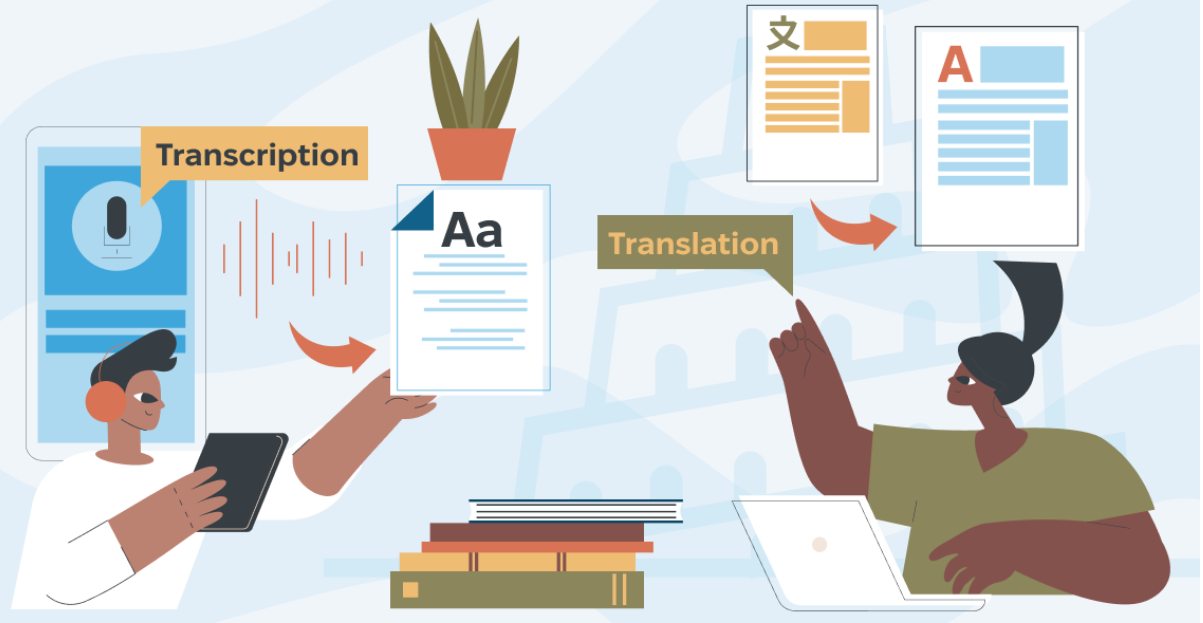
Translation vs. Transcription: What Is the Difference?

What Is Transliteration? How It Differs From Translation and Transcription