How Machine Translation + Human Editing Reduces Time-to-Market
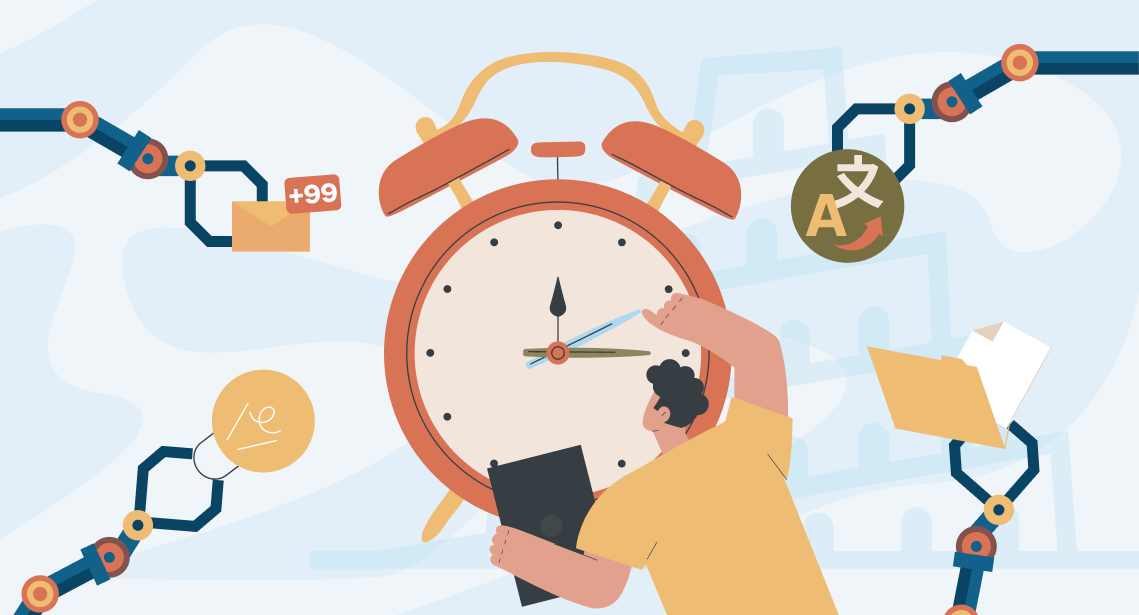
Concerns that machines would replace human translators have existed for decades. Recently, the rapid development of AI has created even more heated discussions about the future of the entire profession. However, despite these fears, translators have not disappeared. Instead, machine translation has transformed how they work. Modern machine translation tools can produce fast, inexpensive, and reasonably accurate drafts. This has led many businesses to ask an important question: how can this technology be used to speed up market entry without sacrificing translation quality?
What is MTPE
Machine Translation Post-Editing (MTPE) is a process in which a professional translator reviews and improves a machine-generated translation. This includes correcting errors, refining wording, fixing grammar and terminology, and ensuring the final text sounds natural and accurate in the target language.
To define machine translation in simple terms: the machine does the first draft, and a human makes it right. MTPE is often used when speed and cost matter, but quality still can’t be compromised.
Benefits of the Machine Translation Post Editing MTPE:
- Saves time: Compared to human translation, MTPE can be performed two to three times faster, providing a competitive advantage.
- Reduces production costs: Post-editing requires significantly less effort from the translator than translating from scratch, although MTPE costs depend on factors such as language pair, subject matter, and project type.
- Flexible: At the post-editing stage, the tone, voice, and complexity of the text can be adjusted according to the client’s needs.
- Supports multilingual translation: MTPE makes it possible to reach global audiences quickly and effectively.
- Facilitates product scalability: Companies can handle large volumes of content more easily, allowing them to scale productivity.
According to memoQ, MTPE can increase translator productivity by up to 350%, with the average number of words translated per day increasing from 2,000 to 7,000. This enables companies to shorten turnaround times, handle larger volumes of content efficiently, and bring multilingual products to market significantly faster.
Machine vs. human translation
The major benefit of human translation is that it provides the highest level of accuracy. When performed by a professional translator, it often doesn’t even feel like a translation from another language. This creates trust among clients and, therefore, revenue. The main drawback is that it is a time-consuming and costly process.
What is a machine translation? Some of the first MT programs, dating back to the 1950s, were rule-based and used dictionaries and grammatical rules to render text from one language to another. They were later replaced by statistical machine translation, which used large amounts of linguistic data. This approach allowed systems to understand context better and significantly improved translation quality.
The newest and most efficient machine translation model is neural machine translation (NMT). It uses neural networks to process large volumes of translated content and learn from them. NMT can understand context more accurately, handle complex morphology, syntax, and even some cultural nuances.
The machine translation benefits are obvious. Depending on the type of text, MT can deliver average to high-quality translations in seconds and process huge amounts of data simultaneously.
Despite the advantages machine language translation brings to businesses and linguists, it is still limited when it comes to texts that require creativity. Many translators agree that it cannot handle literary translation, although it can be used as an auxiliary tool.
How MTPE works in practice
The entire workflow of MTPE Machine Translation Post Editing from the order to transition submission consists of several steps.
Step 1. Preparing the text for translation
It means ensuring that the source text is ready to be translated and does not contain errors and the source file can be accurately
Step 2. Creating the pretranslation with MT tools
Some of the best tools for machine translation are Google Translate, DeepL Translator, Microsoft Translator, Amazon Translate. How does machine translation work? In most cases they are integrated with CAT tools or translation management systems (TMS) so that the automated machine translation and human editing can be performed in one place.
Step 3. Post-editing
There are two types of post-editing that require different amount of effort, therefore the money and serve different purposes. The first one is light editing and it involves the elimination of the biggest mistakes. The second one is full post-editing which results in a text that doesn’t feel generated by machine but authentic.
| Light post-editing | Full post-editing |
| Makes the text understandable | Makes the text professional and natural |
| Fixes only major errors | Fixes all errors |
| Grammar corrected only when necessary | Grammar fully corrected |
| Style and tone not improved | Style and tone improved |
| May sound machine-translated | Sounds human and fluent |
| Consistency not guaranteed | Consistency ensured |
| Minimal quality checks | Full linguistic and technical QA |
| Suitable for internal or low-risk content | Suitable for websites, apps, and customer-facing content |
| Faster and cheaper | Slower but higher quality |
Step 4. Performing quality assurance
This is the last check of the translator`s work before delivering the text to the client. Usually done manually with the help of QA tools, it is intended to verify the overall style, tone of the text and compliance with the client`s requirements.
Benefits for scaling products
The opportunities of MTPE are not limited to fast results and the achievement of short-term objectives. It is also an effective tool for scaling products for a global audience. NMT can learn and improve based on previous translations, so the quality of computer translations is constantly growing. This makes MTPE especially valuable for growing products with frequent updates, large volumes of content, and multiple target markets.
At the same time, MTPE helps maintain consistency across versions and languages by reusing previously approved translations and terminology. This is particularly important for products that evolve rapidly, where maintaining a stable user experience and brand voice across multiple markets is crucial.
It is also important to choose reliable translation partners who can deliver consistent, high-quality translations across different types of content and platforms. Since they already know your requirements and guidelines, you don’t need to spend much time familiarizing them with workflows and quality expectations. This reduces operational overhead and allows your team to focus on product development and market expansion.
When MTPE is (and isn’t) the right choice
Some people believe that MTPE cannot be considered translation because it involves machine translation. In reality, in some cases the quality of machine translation combined with human post-editing can be just as good as, or even better than, fully human translation. Especially for content where consistency is critical such as technical, repetitive, or structured materials.
However, some types of content take as much time to post-edit as to translate from scratch. For example, marketing and creative materials. In most cases, machine translation is not able to fully understand or convey idioms, cultural references, jargon, and ambiguous meanings, which makes it less suitable for emotionally driven texts.
The quality of machine translation also depends on the language pair. It is not particularly effective when working with languages that have complex grammatical structures or uncommon language combinations. In such cases, MT works best as an assistant rather than a replacement, with human expertise ensuring that the final result is accurate and natural.
Final thoughts
Staying competitive and expanding into new markets as quickly as possible has become a key priority for businesses. MTPE plays an important role in helping companies localize products faster without sacrificing quality. However, user-facing content still needs to be thoroughly reviewed by professional translators and proofreaders.
This is why, in recent years, the translation industry has seen strong growth in demand for MTPE specialists. The combination of advanced machine translation and skilled human editors offers a powerful solution for businesses planning to expand into new markets. This approach allows companies to balance speed, cost efficiency, and quality without having to compromise on any of these factors.
Recommended content
Biased Language Explained: How It Affects Translation and Global Communication
Translating Fintech & Crypto Content: Navigating Emerging Terminology and Compliance
Business Translation: A Complete Guide to Managing Multilingual Communication
What Is Internationalization (i18n)? A Practical Guide for Global Products