Why Ukrainian Game Localization Matters
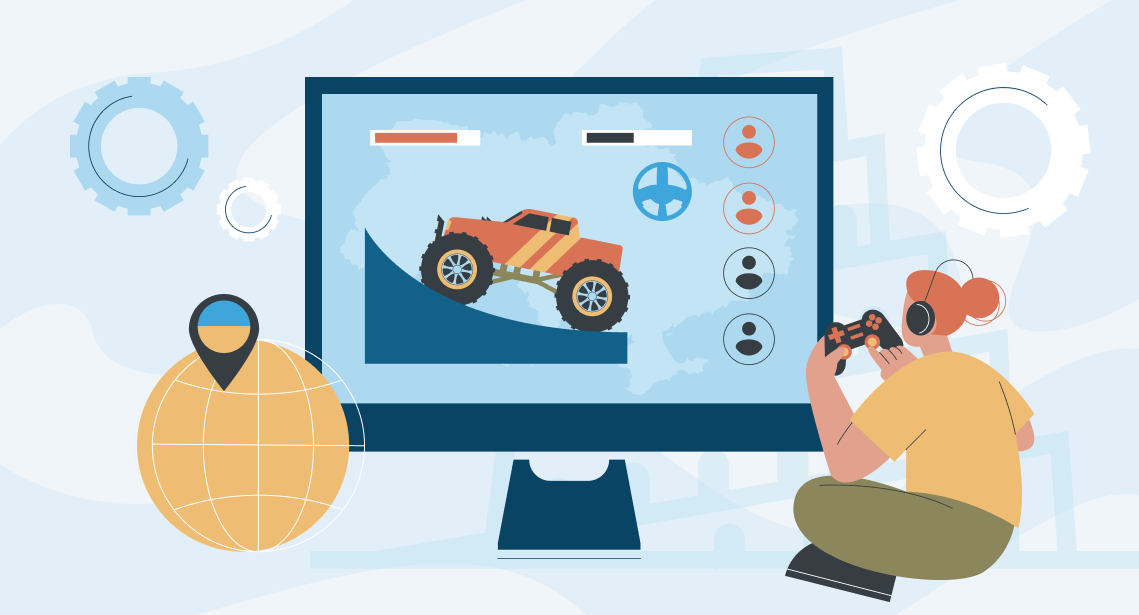
A fast-growing gaming audience you can’t ignore
Ukraine is no longer a niche market for game developers. According to Valve Corporation’s Steam statistics, Ukrainian is already among the top 15 most used languages on Steam, accounting for close to 1% of global users. That may sound small at first glance. It isn’t.
Ukraine’s population is far below 1% of the global population, yet its share of Steam users is approaching that level. This means one thing: Ukrainians are disproportionately active gamers.
If your game is on Steam, Ukrainian players are already there. The only question is whether your product speaks their language.
Language is no longer neutral
Since the start of Russia’s full-scale invasion, language in Ukraine has become more than a communication tool. It’s an identity marker. Millions of Ukrainians have switched from Russian to Ukrainian in everyday life. This shift is especially strong among younger audiences.
Think about the next generation of players. A child who is 7 years old today may grow up reading, writing, and consuming content primarily in Ukrainian, not Russian. This creates a clear trend: Demand for Ukrainian content will keep increasing.
There’s also a reputational risk. Offering only Russian localization to Ukrainian users can feel outdated at best and offensive at worst. In a market shaped by war and identity, that decision can easily backfire.
Legal requirements are already in place
Ukraine is not just a cultural case, it’s also a regulatory one. Ukrainian law requires consumer-facing products to be available in Ukrainian. This includes website content, user interfaces, product information.
Non-compliance can lead to fines. Yes, enforcement is not always consistent. Jurisdiction limitations and wartime realities affect control. But do you want your market strategy to depend on whether regulators notice you or not? Serious companies don’t treat compliance as a lottery.
Localization is no longer expensive
One of the most common objections is cost, especially for indie and mid-tier developers. That argument is quickly becoming outdated. AI tools now allow faster translation, low-cost subtitling, and even scalable voice-over generation.
The key is not to replace humans entirely, but to combine AI with a Ukrainian linguist who reviews and refines the output. This hybrid approach dramatically reduces costs while maintaining acceptable quality.
And here’s an important nuance: Ukrainian gamers are not perfectionists when it comes to localization. Many will prefer a slightly imperfect Ukrainian interface over a perfectly polished Russian one, because it aligns with their language and identity.
The bottom line
Ukrainian game localization is not just about translation.
It’s about:
- Accessing a highly engaged gaming audience
- Aligning with a major cultural shift
- Staying on the right side of regulation
- Leveraging new, cost-efficient technologies
Ignoring Ukrainian today doesn’t save money. It simply means leaving a growing, motivated audience behind.
Recommended content
Translation vs. Transcription: What Is the Difference?

What Is Transliteration? How It Differs From Translation and Transcription
What Is a Lingua Franca? Meaning, Examples, and Common Uses
How Many Languages Are There in the World?