How Remote Interpretation Works: A Complete Guide for Businesses
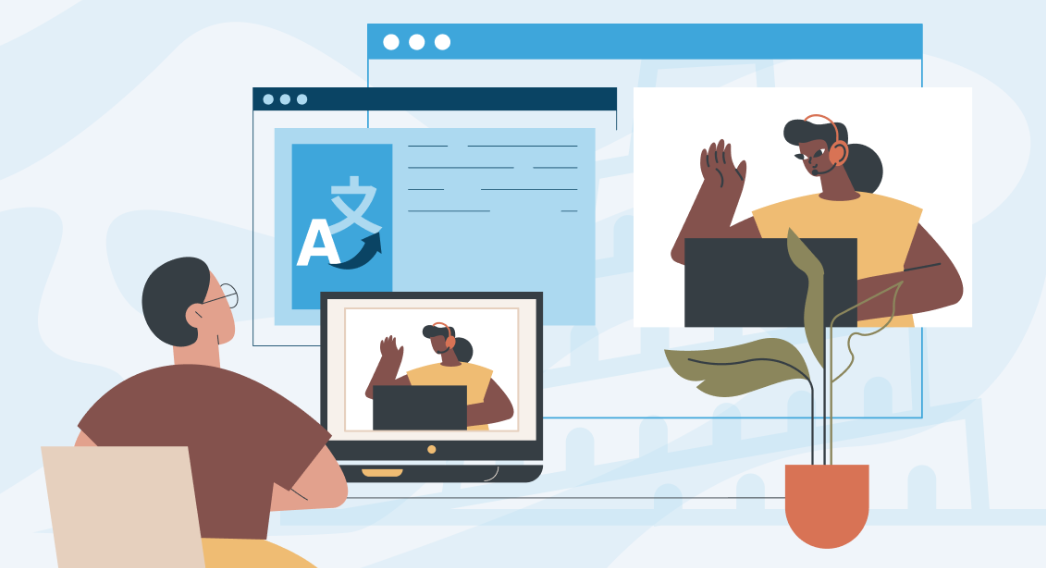
Modern technologies give us unprecedented opportunities to communicate and expand our global reach regardless of where we are or what languages we speak. As many companies have switched to online operations, interpreters have also found a way to offer their services without leaving home or the workplace through remote interpretation.
While on-site interpretation is still an important part of cross-border communication, online interpreting services benefit both clients, who get instant access to professional linguists, and interpreters, who can find customers all over the world.
In this article, we are going to take a closer look at remote interpretation. We will explore how it works, what the main types of virtual interpretation are, its benefits, and its main challenges. We will also share some recommendations on how to find a platform and an interpretation service provider that meet your specific needs.
What is remote interpretation
Remote interpreting is a type of interpretation service that is provided through communication technology (phone or video calls, VRI and RSI platforms, etc.) instead of regular in-person interaction. It is widely used in business, IT, education, customer support, legal communication, healthcare, and other public services.
Remote interpreting is a perfect option for global companies operating in multiple countries, as well as for online meetings, conferences, webinars, workshops, and other occasions when on-site interpreters are unavailable or too costly.
Online interpretation removes not only language barriers but also geographical constraints, allowing companies to hire specialized linguists or certified interpreters for even very rare language pairs from anywhere in the world. It also saves time and money since you don't have to pay for accommodation or wait for interpreters to arrive.
How does remote interpretation work
To ensure a smooth interpretation process, appropriate equipment is a must. Depending on the type of interpretation, the basic technical requirements may include:
- For video remote interpreting: A computer or laptop capable of running the necessary software, equipped with a microphone, camera, dedicated headset for optimal audio quality, and a stable high-speed internet connection.
- For over-the-phone interpretation: A phone line and a stable cellular or landline network.
- For remote simultaneous interpretation: A specialized cloud-based platform and a virtual interpreter booth interface.
Your interpreter must be familiar with remote interpreting platforms and have the technical capability to perform the service without interruptions. When participants join a video or phone call, interpretation starts immediately (if simultaneous) or right after the speaker delivers a segment of speech (if consecutive).
Additionally, interpreters may also translate on-screen materials such as documents, slides, and shared presentations in real time.
Types of remote interpretation
There are several ways remote interpretation can be delivered. Depending on your needs, workload, topic, language pairs, number of participants, and overall scale of the event, you can choose between consecutive or simultaneous interpretation delivered via video or phone.
Video remote interpreting (VRI)
Video remote interpreting (VRI) is the most popular service because it provides excellent real-time language support while being convenient and cost-effective. You don't need specialized hardware—communication happens through standard video conferencing software such as Zoom, Microsoft Teams, or Google Meet. VRI services are typically billed on an hourly basis.
- When it is used: Business meetings, presentations, medical appointments, legal consultations, court hearings, online courses, and customer service calls.
- Benefits: Saves travel costs, enables visual communication (body language, facial expressions), allows screen sharing, and supports meeting recording.
- Challenges: Requires high-speed internet and reliable audio/video equipment for all key participants.
Remote simultaneous interpretation (RSI)
Remote simultaneous interpretation (RSI) is designed for real-time translation where speed and continuous flow are crucial. In RSI, the linguist translates the speaker's words concurrently with a delay of only a few seconds.
Unlike traditional setups that require bulky soundproof booths and physical hardware, RSI relies on specialized cloud-based platforms. These platforms allow interpreters to listen to the speaker, translate in real time, and broadcast audio directly to participants' smartphones or computers.
- When it is used: Large international conferences, webinars, global corporate summits, multilingual press releases, and virtual trade shows.
- Benefits: Highly efficient, eliminates delays in speech delivery, and allows multiple language channels to run simultaneously.
- Challenges: Requires advanced platforms, professional audio hardware, and high-bandwidth internet connections to prevent latency issues.
Consecutive remote interpretation
In consecutive interpretation, the speaker pauses after every few sentences to allow the interpreter time to translate the message. This method creates a natural back-and-forth dialogue between parties.
Because participants do not speak over each other, consecutive interpretation does not require complex multi-channel hardware or specialized software. It remains one of the most reliable forms of virtual interpretation for smaller, focused interactions.
- When it is used: One-on-one business meetings, diplomatic negotiations, legal depositions, technical interviews, and press briefings.
- Benefits: Ensures maximum accuracy and precision as linguists can take detailed notes; cost-effective and easy to manage technically.
- Challenges: Doubles the duration of the meeting or conversation due to pauses between speech segments.
Over-the-phone interpretation (OPI)
Over-the-phone interpretation (OPI) delivers immediate, audio-only language support over standard telephone lines or VoIP networks. It is the most accessible and rapidly deployable form of remote interpretation available.
OPI requires zero software setup or web cameras, making it an essential solution when immediate assistance is needed or internet access is limited.
- When it is used: Emergency health services, call centers, emergency customer support lines, banking transactions, and quick administrative inquiries.
- Benefits: Instant access 24/7, works on any standard telephone line, highly budget-friendly.
- Challenges: Lacks visual cues and body language, which can occasionally lead to minor context misunderstandings.
Benefits of remote interpretation for businesses
Adopting online interpreting services provides a massive advantage for companies aiming to expand their international operations. Beyond basic language access, virtual communication strategies drive efficiency across multiple business sectors:
- Cost efficiency: Eliminates expenses related to travel, hotel accommodations, venue rentals, and physical interpreting booth installations.
- Instant scalability: Rapidly add new language pairs as your global client base grows without waiting for local linguists to become available.
- Access to specialized expertise: Connect with certified expert linguists who possess domain-specific knowledge in legal, medical, or technical fields.
- Streamlined operations: Integrate translation layers directly into your existing corporate communications stack and daily meeting routines.
Choosing the right remote interpreting platform
Selecting optimal remote interpreting platforms is key to hosting successful virtual events and internal meetings. A solid software foundation minimizes technical friction for both attendees and language specialists.
When evaluating potential tools, look for software that natively supports features such as online meeting simultaneous translation. Platforms with dedicated interpreter interfaces allow specialists to smoothly switch channels, coordinate with co-interpreters, and manage audio feeds without disrupting primary speakers.
If you are organizing large virtual events, ensure your platform can function as a reliable simultaneous translation app for conference settings. Features such as simple channel selection for attendees, low-latency audio streams, and seamless integration with popular enterprise meeting tools (Zoom, Microsoft Teams, Webex) are essential.
Challenges of remote interpretation and how to overcome them
While remote language solutions offer significant flexibility, businesses can encounter operational obstacles during implementation. Understanding these hurdles helps you build proactive technical protocols.
| Challenge | Impact on meeting | Recommended solution |
| Audio latency & lag | Interrupts speech flow and creates confusion for listeners. | Require interpreters and speakers to use wired ethernet connections and dedicated headsets. |
| Poor audio quality | Causes interpreter fatigue and increases error potential. | Conduct pre-event audio checks; utilize professional noise-canceling hardware. |
| Platform instability | Leads to dropped audio channels or connection losses. | Choose specialized remote interpreting systems or high-grade enterprise platforms. |
| Security risks | Exposes confidential corporate discussions to data leaks. | Ensure end-to-end encryption and compliance with GDPR/HIPAA standards. |
By addressing potential technical constraints prior to live events, companies can ensure smooth execution across all virtual communication channels.
How to choose a remote interpretation provider
Partnering with the right Language Service Provider (LSP) ensures your business receives reliable, high-quality video remote interpreting services tailored to your specific industry requirements.
Here are the critical factors to evaluate when selecting your remote translation partner:
- Linguistic qualifications & expertise: Verify that the agency works with certified, professional linguists who have proven subject-matter expertise in your industry.
- Platform compatibility & technology: Look for providers that offer robust interpretation tools or work seamlessly with your company’s preferred meeting software.
- Security standards: Ensure the provider enforces strict confidentiality non-disclosure agreements (NDAs) and utilizes secure, encrypted transmission channels.
- Customer support & backup plans: Choose an agency that offers real-time technical monitoring and immediate backup linguists in case of sudden connection failures.
Investing time in choosing a trusted expert language provider empowers your business to build seamless global relationships, communicate without language barriers, and maximize modern technology to achieve your international goals.
Recommended content

How to Run a Tender for Ukrainian Translation Services

How to Localize E-commerce Product Descriptions to Boost Global Conversion Rates
Translation vs. Transcription: What Is the Difference?

What Is Transliteration? How It Differs From Translation and Transcription