Financial Translation: The Ultimate Guide
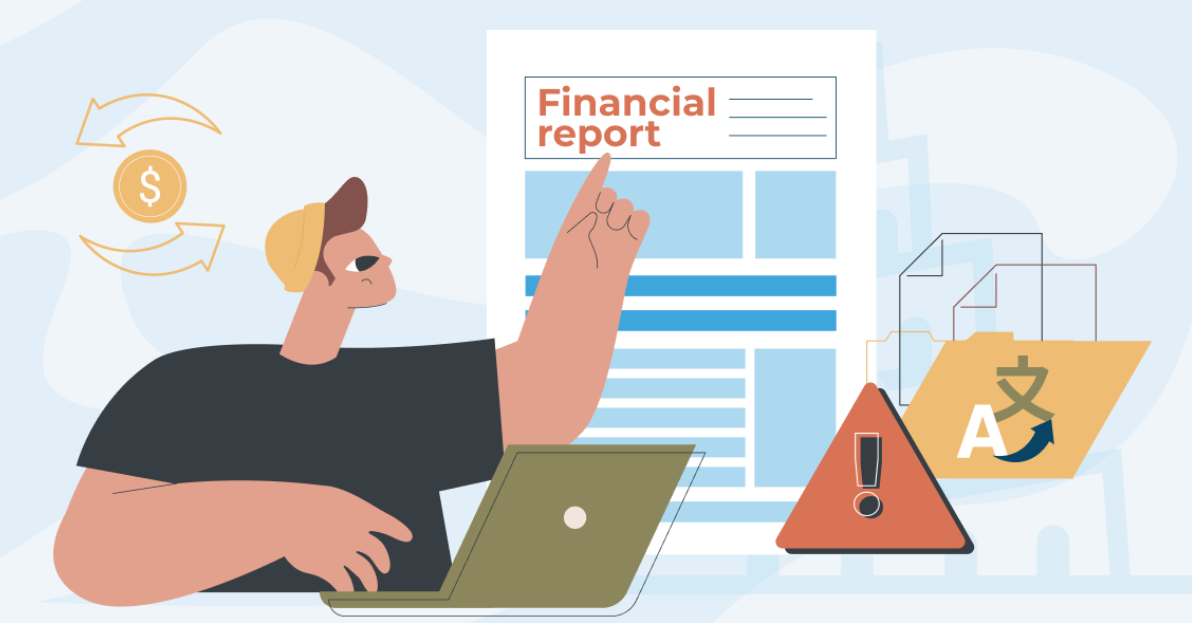
In a globalized economy, financial information constantly moves between countries, markets, and business environments. Banks cooperate with international institutions, companies attract foreign investors, and fintech platforms provide services to users worldwide. In all these situations, accurate financial communication is essential.
Financial translation is a specialized field that combines linguistic expertise with knowledge of finance, accounting, regulations, and industry standards. Unlike general translation, it requires a deep understanding of financial concepts and the ability to preserve the exact meaning of complex documents.
A single mistake in a financial report, investment agreement, or banking document can create serious consequences. Incorrect terminology may lead to misunderstandings, compliance issues, or inaccurate business decisions.
This is why organizations rely on professional specialists who understand both language and financial processes. Modern businesses require different types of financial translation, including banking translation, investment translation, accounting translation, and fintech translation.
As companies expand internationally, they also need financial localization to ensure that documents, platforms, and financial content meet the expectations of local audiences.
This guide explains what financial translation is, which documents require specialized expertise, why this field is challenging, and how businesses can choose the right translation provider.
What is financial translation
Many companies ask what financial translation is and why it is different from standard translation.
Financial translation is the process of translating documents and materials related to finance, banking, investments, accounting, and corporate operations while maintaining accuracy, consistency, and compliance.
The purpose of financial translation is not simply to replace words from one language with another. Specialists must preserve the meaning of financial information, adapt terminology correctly, and consider the requirements of the target market.
Financial translation requires knowledge of:
- financial reporting;
- accounting principles;
- investment activities;
- banking operations;
- taxation;
- regulatory requirements.
For example, an annual financial report prepared for international investors cannot be translated word-for-word. The translator must understand financial statements, industry terminology, and how specific concepts are interpreted in another country.
What is financial translation, and why do professional financial translations matter
Professional financial translations help organizations communicate essential information with investors, customers, regulators, and business partners.
Unlike general translation, financial translations require specialists who understand the context behind the documents. They must know how financial concepts work and how terminology should be adapted for different markets.
Financial translations are widely used by:
- banks and financial institutions;
- multinational corporations;
- investment companies;
- insurance providers;
- fintech organizations.
Accurate translation allows businesses to maintain credibility and build trust in international markets.
What types of financial documents require translation
Financial document translation for international business
Companies operating internationally work with many types of financial documents. Each document requires careful handling because it often contains technical information, confidential data, and legally crucial details.
Common examples include:
| Financial document | Purpose |
| Annual reports | Present company performance to investors and stakeholders |
| Financial statements | Support reporting and compliance requirements |
| Banking agreements | Explain financial services and obligations |
| Investment documents | Provide information for international investors |
| Audit reports | Ensure transparency and regulatory compliance |
| Accounting records | Support international business operations |
| Fintech documentation | Explain digital financial products |
Financial document translation requires more than language skills. Specialists must understand financial terminology, reporting standards, and the purpose of each document.
For example, investment documents must clearly communicate risks, financial performance, and market opportunities. A translation error may influence how investors evaluate a business decision.
Banking documents require the same level of precision. Contracts, payment instructions, and compliance materials often have legal consequences, so terminology must be translated accurately.
Why financial translation is so challenging
Financial translation is one of the most demanding areas of professional translation because it combines language, finance, and regulatory knowledge.
Financial terminology
Financial terminology is one of the biggest challenges in specialized translation. Many financial terms have specific meanings that depend on context, industry, and country.
A translator working with financial documents must understand concepts related to accounting, investments, banking, and reporting standards.
A word-for-word approach can create inaccurate or misleading content. The correct translation depends on understanding the financial meaning behind the term.
Terminology consistency is especially important for companies that regularly translate large volumes of financial materials.
Professional teams often create terminology databases containing:
- approved financial terms;
- company-specific expressions;
- industry abbreviations;
- regulatory terminology.
This approach helps organizations maintain consistency across reports, contracts, and other documents.
Regulatory requirements
Financial industries operate under strict regulatory frameworks. Translated documents must comply with the requirements of the target market.
Different countries may have different rules regarding:
- financial reporting;
- taxation;
- investment disclosures;
- banking regulations;
- compliance documentation.
A document may be linguistically correct but unsuitable if it does not reflect local legal requirements.
Professional translators consider both language and regulatory context to ensure that financial information remains accurate and reliable.
Country-specific accounting standards
Accounting standards differ between countries, creating additional challenges for international companies.
Some financial concepts may not have direct equivalents in another language. Specialists must determine whether terminology should be translated directly, adapted, or explained for the target audience.
This is particularly significant when preparing reports for foreign investors, auditors, and regulatory authorities.
The financial translation process
A professional financial translation process includes several crucial stages that help ensure accuracy, consistency, and compliance. Financial documents often contain confidential information and specialized terminology, so every step requires careful planning and expert knowledge.
A structured workflow allows companies to receive translations that are not only linguistically correct but also appropriate for business, legal, and regulatory purposes.
Project assessment
The first stage of the process is a detailed project assessment. Before translation begins, specialists analyze the documents, identify potential challenges, and determine the requirements of the project.
During this stage, the team evaluates:
- the type and complexity of the documents;
- the target audience;
- industry-specific terminology;
- regulatory requirements;
- formatting and delivery expectations.
For example, translating a financial report for international investors requires a different approach compared with translating internal accounting materials or customer documentation.
Project assessment also includes identifying confidentiality requirements. Financial documents often contain sensitive information about company performance, investments, and business strategies. Professional providers use secure processes to protect client data.
Terminology preparation
Terminology preparation is a key part of financial translation because consistency directly affects the quality of the final result.
Before starting the translation process, specialists may create terminology databases that include:
- approved financial terms;
- company-specific terminology;
- industry abbreviations;
- regulatory expressions.
This approach is especially valuable for organizations that regularly publish financial reports, contracts, and corporate documents in multiple languages.
Consistent terminology helps companies:
- maintain a professional image;
- reduce misunderstandings;
- improve communication with international partners;
- ensure accuracy across different documents.
Translation by financial specialists
Professional financial translation service
Translation by financial specialists ensures that complex financial information is handled by professionals who understand both language and finance.
Unlike general translators, financial specialists have knowledge of:
- accounting principles;
- investment terminology;
- banking procedures;
- financial regulations;
- industry-specific communication standards.
A professional financial translation service includes not only translation but also terminology management, editing, quality control, and adaptation for the target market.
Companies working with international financial information often choose specialized providers because accuracy and reliability are critical. Professional specialists understand that financial documents are not just texts—they are important business tools that influence decisions and relationships.
Financial translation across different industries
Financial translation is required across many industries because financial information is an essential part of international business operations.
Although each sector has its own terminology and requirements, the main goal remains the same: preserving accuracy, clarity, and professional meaning.
Banking translation for global financial institutions
Banks operate in highly regulated environments where precision is essential. Banking translation requires a strong understanding of financial terminology, legal requirements, and industry standards.
Banking documents may include:
- account agreements;
- loan documentation;
- payment instructions;
- compliance materials;
- customer communication.
These documents often define financial obligations and legal responsibilities. Even a small terminology mistake can create confusion or increase business risks.
Professional banking translators help financial institutions communicate effectively with international customers, partners, and regulators.
Investment translation for international markets
International investment depends on transparent and accurate communication. Investors need reliable information to evaluate opportunities, risks, and financial performance.
Investment translation is commonly required for:
- investment proposals;
- fund documentation;
- shareholder reports;
- market research;
- financial forecasts.
These materials require careful handling because translated information may influence investment decisions.
A qualified specialist must preserve the meaning of financial data while adapting the content to the expectations of the target audience.
Accounting translation for corporate reporting
International companies often require accounting translation when cooperating with foreign partners, auditors, and regulatory institutions.
Accounting documents may include:
- financial statements;
- audit reports;
- tax documentation;
- internal accounting records.
This type of translation requires knowledge of accounting standards and financial terminology. A specialist must understand not only the language but also the accounting concepts behind the documents.
Fintech translation for digital financial products
The growth of digital finance has significantly increased demand for fintech translation.
Fintech combines financial services with technology, software, and digital user experiences. Therefore, translators need to understand both financial concepts and technological solutions.
Fintech translation projects may include:
- mobile banking applications;
- online payment platforms;
- digital investment services;
- financial software interfaces.
High-quality fintech translation helps users from different countries understand and confidently use digital financial products.
Financial localization vs. financial translation
Financial translation and financial localization are closely connected but serve different purposes.
Translation focuses on transferring financial information from one language to another while preserving the original meaning. Localization goes further by adapting content to the expectations, regulations, and communication standards of a specific market.
For international companies, financial localization is often essential because financial systems, accounting practices, and user expectations vary between countries.
A successful localization process considers:
- local financial terminology;
- regulatory requirements;
- currency presentation;
- date and number formats;
- cultural expectations.
For example, a fintech company launching a digital banking platform in a new country may need more than translated text. The interface, payment information, and financial terminology should be adapted for local users.
The purpose of financial localization is to make financial content understandable and natural for a specific audience while maintaining accuracy and compliance.
Translating numbers is not enough
Financial translation is not limited to converting words between languages. Numbers and financial data require the same level of attention as written content.
Specialists must carefully handle:
- financial figures;
- percentages;
- currency values;
- dates;
- accounting formats.
A document can be grammatically correct but still create confusion if numerical information is presented according to the wrong local conventions.
For example, different countries use different decimal separators, date formats, and methods of displaying financial values. These details can significantly affect how readers interpret financial information.
Professional translators understand that accuracy in financial documents depends on both language and numerical consistency.
Currency, date, and number formats
Currency, date, and number formats are significant elements of financial localization.
Different markets may use different standards for presenting financial information. Specialists adapt these elements according to local expectations while preserving the meaning of the original document.
Important considerations include:
- currency symbols and international currency codes;
- decimal and thousands separators;
- date formatting standards;
- percentage presentation;
- accounting conventions.
However, localization does not always mean changing original financial data. Official reports, contracts, and investment documents may need to maintain the original currency while providing additional explanations for international readers.
A professional approach ensures that financial information remains both accurate and easy to understand.
Local financial terminology
Local financial terminology plays an essential role in creating reliable financial content.
A term commonly used in one country may have a different accepted equivalent in another market. Translators must research industry practices and understand the professional context in which terms are used.
This is especially important for multinational companies that prepare financial reports, contracts, and corporate materials for different regions.
Consistent terminology helps organizations build trust and ensures that investors, customers, and business partners receive clear information.
Best practices for high-quality financial translation
High-quality financial translation requires a combination of professional expertise, technology, and quality control.
The most effective practices include:
- working with translators who specialize in finance;
- maintaining terminology databases;
- applying professional editing and review;
- protecting confidential information;
- adapting content for local markets.
Technology can improve translation workflows by helping teams manage terminology and maintain consistency. However, human expertise remains essential because financial documents often require interpretation of complex concepts and regulatory requirements.
A strong quality assurance process may include proofreading, terminology verification, and final review by financial specialists.
For international companies, investing in quality financial translation helps reduce risks and ensures effective communication across markets.
Common mistakes in financial translation
Businesses may face significant challenges when financial translation is performed without sufficient expertise.
Common mistakes include:
- working with general translators without financial knowledge;
- relying only on automated translation tools;
- ignoring local regulations;
- translating terminology without considering context;
- failing to adapt documents for the target audience.
Automated tools can support certain translation tasks, but they cannot always understand complex financial concepts, legal requirements, or industry-specific terminology.
Because financial documents often influence crucial business decisions, accuracy should always remain the priority.
How to choose a financial translation provider
Choosing the right financial translation provider is an important decision for organizations working with international financial information.
Companies should evaluate several factors:
- experience with financial industries;
- knowledge of banking, investment, and accounting terminology;
- quality assurance procedures;
- confidentiality standards;
- ability to support international projects.
A reliable provider should understand the purpose behind financial documents and provide solutions that meet both linguistic and business requirements.
Organizations looking for professional support can benefit from specialized financial translation services that combine linguistic expertise with knowledge of financial regulations, terminology, and industry standards.
The best translation partners combine language expertise with financial knowledge. They help organizations communicate effectively with investors, customers, regulators, and international partners.
Conclusion
Financial translation has become an essential part of international business communication. As companies expand into new markets, accurate and reliable financial information becomes increasingly important.
From banking documents and investment reports to accounting materials and fintech platforms, professional translation helps organizations maintain transparency, reduce risks, and build trust.
Successful financial translation is not simply about replacing words from one language with another. It requires a combination of linguistic expertise, financial knowledge, regulatory awareness, and understanding of local markets.
By working with experienced specialists and applying professional quality standards, businesses can ensure that their financial information remains accurate, clear, and effective worldwide.
Recommended content

What Is Transliteration? How It Differs From Translation and Transcription

What Is a Lingua Franca? Meaning, Examples, and Common Uses
How Many Languages Are There in the World?
What Is a Language Family? Major Language Families Explained