B2B vs. B2C Localization: How Target Audiences Change Your Translation Strategy
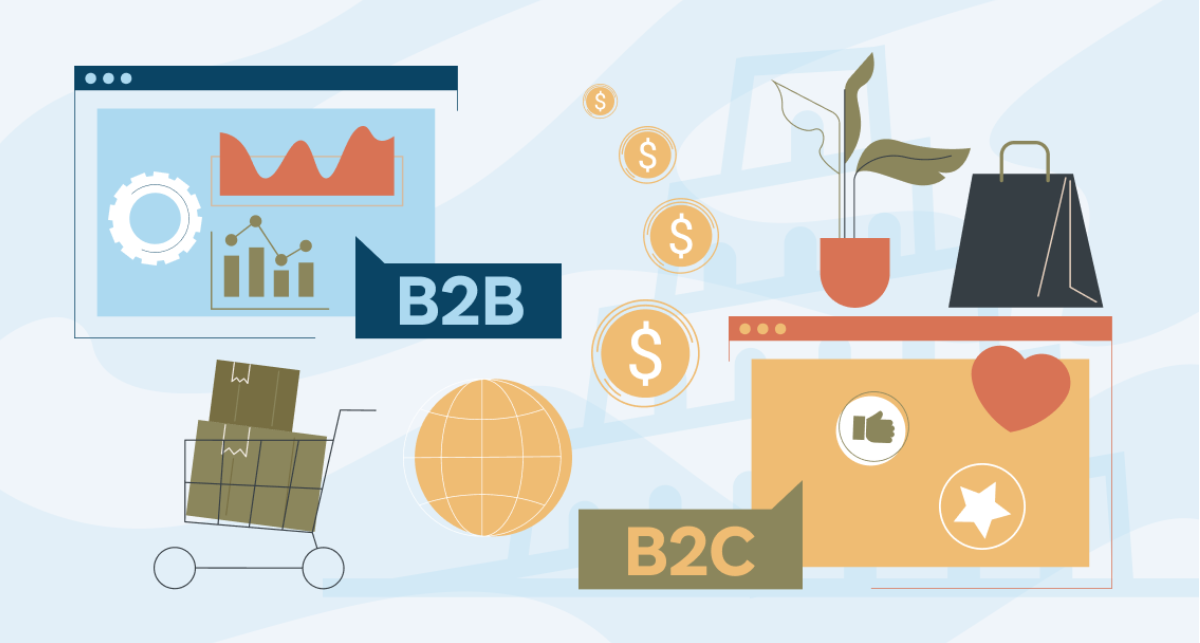
The biggest distinction between B2B and B2C localization lies in how audiences make decisions. B2B buyers typically evaluate products and services through a rational lens, prioritizing measurable outcomes such as ROI, compliance, operational efficiency, and long-term business value. Purchasing decisions often involve multiple stakeholders, making consistency, technical accuracy, and credibility essential. As a result, multilingual corporate marketing focuses on preserving precise terminology, adapting industry-specific content, and maintaining a professional tone across every target language.
B2C localization follows a different path because consumer decisions are far more influenced by emotional purchasing triggers than by purely logical arguments. While price and product features remain important, people often respond first to emotions, personal identity, and cultural familiarity before justifying their purchase rationally. This makes cultural relevance marketing a central component of successful localization. Translators and localization specialists frequently adapt slogans, imagery, humor, calls to action, and storytelling—not simply to translate words, but to recreate the emotional impact for each market. Research also suggests that marketing messages presented in a consumer's native language tend to evoke stronger emotional responses, reinforcing the importance of culturally adapted content that resonates with local values and communication styles rather than relying on literal translation alone.
B2B localization: navigating long sales cycles, technical terminology, and industry standards
Successful B2B marketing localization requires much more than translating product descriptions or website copy. Business buyers conduct extensive research before making a purchase, often comparing multiple vendors over weeks or even months. The sales cycle length in B2B markets is significantly longer than in consumer transactions because purchases typically involve higher financial commitments, contract negotiations, and risk assessments. Throughout this process, companies rely on localized white papers, technical documentation, case studies, product specifications, and compliance materials to demonstrate expertise and reduce uncertainty. Every piece of content must remain technically accurate and consistent across languages, as even minor terminology errors can undermine credibility and delay purchasing decisions.
Another defining aspect of B2B localization is the need to localize business-to-business content for multiple stakeholders rather than a single buyer. Modern purchasing decisions are frequently influenced by B2B decision makers from different departments—including procurement, finance, operations, IT, and executive leadership—each evaluating the content from a different perspective. Because enterprise purchases are often evaluated based on measurable business outcomes, localized content must clearly communicate value, helping organizations assess the potential return on investment (ROI) before committing to a solution. Localization strategies therefore prioritize standardized terminology, regulatory compliance, industry-specific language, and messaging that aligns with local business practices. Instead of relying on persuasive or emotionally driven copy, effective B2B localization builds confidence through clarity, precision, and professionally adapted content that supports informed decision-making at every stage of the buying process.
B2C localization: mastering cultural trends, microcopy, and rapid conversions
Unlike B2B communications, B2C content translation is designed to influence fast purchasing decisions, often within a single browsing session. Consumers respond to messaging that feels familiar, culturally relevant, and emotionally engaging, making localization far more than a word-for-word translation process. Successful B2C campaigns adapt product descriptions, promotional messages, seasonal offers, slogans, and visual elements to reflect local customs, humor, shopping behaviors, and current cultural trends. Because consumer preferences can shift quickly, brands must continuously update localized content to stay aligned with market expectations and maintain relevance across different regions and digital channels. This approach helps increase engagement, strengthen brand affinity, and encourage immediate action.
Equally important is the localization of user interface (UI) microcopy—the small but essential pieces of text that guide users through digital experiences, such as navigation labels, buttons, checkout instructions, error messages, onboarding prompts, and confirmation notifications. Although brief, these interface elements have a significant impact on usability and conversion rates because they influence how confidently users interact with a product or complete a purchase. Effective UI microcopy localization balances linguistic accuracy with natural, concise language while considering cultural expectations, tone of voice, character limits, and platform conventions. When every interaction feels intuitive and localized, brands create a smoother customer experience that reduces friction and supports higher conversion rates.
Content types and channels: Adapting whitepapers vs. social media feeds
An effective translation strategy target audience begins with recognizing that different content formats serve different stages of the customer journey. Whitepapers, technical guides, and industry reports are intended to educate prospects who are actively evaluating solutions, so localization emphasizes accuracy, terminology consistency, and subject-matter expertise. This is where professional whitepaper translation services play a critical role, ensuring complex information remains technically precise while reflecting local business conventions and regulatory expectations. In contrast, social media feeds prioritize brevity, engagement, and cultural relevance. Rather than translating content literally, localization teams adapt tone, humor, visuals, hashtags, and calls to action based on buyer persona adaptation, ensuring each post resonates with regional audiences and platform-specific user behavior.
The localization approach also varies depending on the channel and user intent. A strong consumer market localization strategy often combines localized social campaigns with websites, product pages, and email marketing, all optimized using market-specific multilingual SEO keywords instead of direct keyword translations. Meanwhile, digital products require organizations to localize software user onboarding, including welcome flows, interface copy, tutorials, and support content, so new users can quickly understand the product within their linguistic and cultural context. Together, these adaptations create a consistent customer experience across educational assets, marketing channels, and product interactions, while ensuring every content type supports the expectations and decision-making process of its intended audience.
The role of transcreation: where rigid translation fails the consumer market
The debate around transcreation vs. translation business becomes especially important in B2C localization, where marketing success depends on emotional engagement rather than linguistic accuracy alone. While conventional translation preserves the meaning of the source text, it often fails to recreate the cultural references, humor, wordplay, or persuasive tone that influence consumer behavior. Transcreation takes a more creative approach by adapting slogans, campaign messages, product names, and brand storytelling to evoke the same emotional response in the target market—even if the final wording differs significantly from the original. This makes transcreation particularly valuable for advertising, social media, landing pages, and other customer-facing content where cultural relevance and brand resonance directly affect engagement and conversion rates.
Managing translation assets: Glossaries for B2B systems vs. style guides for B2C brands
One of the most important distinctions in B2B vs. B2C localization is the type of linguistic assets that drive translation quality. In B2B environments, terminology consistency takes priority because technical documentation, software interfaces, product manuals, and compliance materials rely on standardized language. This is where translation glossary creation becomes essential. A well-maintained glossary establishes approved translations for product names, acronyms, and industry-specific terminology, ensuring that every translator, reviewer, and localization platform uses identical terms across projects. Beyond improving accuracy, glossaries reduce revision cycles, accelerate translation workflows, and help organizations maintain consistency across multilingual documentation and long-term product updates.
B2C localization, on the other hand, depends more heavily on preserving a recognizable brand identity than on enforcing technical vocabulary. Instead of focusing primarily on terminology, companies develop a localization style guide that defines tone of voice, preferred writing style, levels of formality, cultural preferences, punctuation, formatting conventions, and messaging guidelines for each target market. These resources enable translators and copywriters to recreate the same brand personality across websites, advertising campaigns, mobile apps, and social media while adapting content to local cultural expectations. Together, glossaries and style guides form complementary linguistic assets, but their relative importance shifts according to whether the localization project prioritizes technical precision or emotional brand consistency.
Conclusion: Aligning your localization framework with your corporate revenue model
An effective localization strategy starts with understanding how your business generates revenue and how your audience makes purchasing decisions. Rather than applying the same process to every market or content type, organizations should focus on tailoring translation framework practices to match their business model, customer expectations, and sales process. B2B companies typically benefit from workflows that prioritize terminology management, technical accuracy, regulatory compliance, and structured review cycles, while B2C brands achieve stronger results by emphasizing cultural adaptation, emotional messaging, and brand voice consistency across every customer touchpoint. Aligning localization priorities with business objectives helps ensure that translated content supports both customer trust and long-term growth.
Ultimately, localization should be viewed as a strategic investment rather than a standalone translation task. Whether the goal is shortening enterprise sales cycles or increasing consumer engagement, every localized asset should contribute to measurable business outcomes such as:
- Conversion rate optimization (CRO)
- Customer retention
- Market expansion
Organizations with digital products can further strengthen their global presence by integrating localization into a scalable SaaS localization pipeline, allowing website content, software interfaces, documentation, and marketing materials to remain synchronized as products evolve. When localization frameworks reflect both audience expectations and corporate revenue models, companies are better positioned to deliver consistent experiences, improve performance across international markets, and maximize the return on their global marketing efforts.
Recommended content

Influencer Marketing Localization: Adapting Creator Content for Local Audiences

How to Run a Tender for Ukrainian Translation Services

How to Localize E-commerce Product Descriptions to Boost Global Conversion Rates

Translation vs. Transcription: What Is the Difference?