Do Not Be Afraid to Outsource Translations to Ukraine

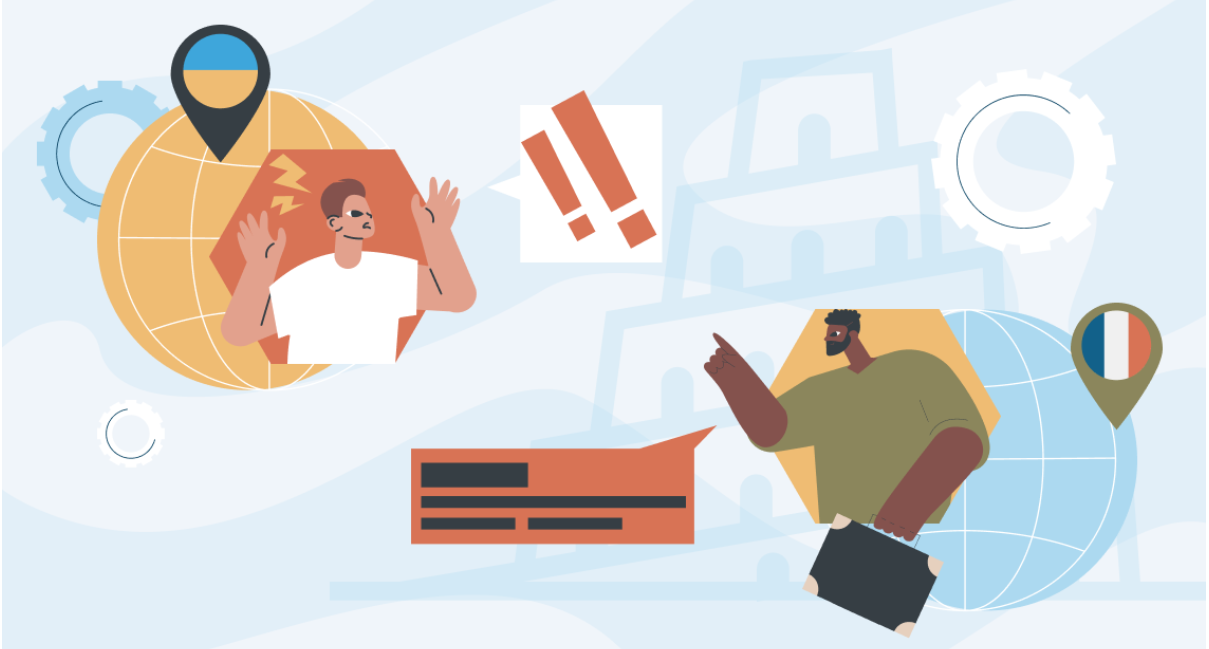
Since 2022, we have seen numerous cases of Western companies searching for Ukrainian translators but insisting that they MUST NOT be located in Ukraine. Often, Ukrainian suppliers are excluded from contracts due to so-called “safety considerations.” Let me explain why this approach is misguided.
We understand where these fears come from. Every day, you see news from Ukraine showing destroyed cities and bombed residential buildings, leading you to believe that the entire country looks like that. However, this perception is a result of sampling bias—news outlets rarely show the normal, everyday life that continues here.
To understand how this is possible, consider the geography of Europe and search for which country is the largest (excluding Russia). The answer is Ukraine. Crossing Ukraine from east to west is a journey of over 1,300 kilometers—so long that driving it in a day would leave you utterly exhausted. Even though 20% of our territory is occupied, and some cities are indeed destroyed, there are many places where life goes on as usual.
In fact, there are people here who have never personally seen a damaged building, provided they don’t travel much. Cities like Kyiv, Lviv, and others often have traffic jams, bustling businesses, and fully booked restaurants. In these areas, we are not living in ruins or working with machine guns by our sides. We live normal lives when there are no incoming rockets, and we continue to work as usual, delivering translations on time.
Even during the most challenging times, like prolonged power outages, we adapted by purchasing powerful batteries, generators, and Starlink terminals. Now, these disruptions are minor inconveniences rather than serious obstacles. If your office loses power or the Internet, your work might grind to a halt. At Technolex, we simply switch our computers to generator power and connect to the Internet via Starlink. We’ve done this many times, and the procedure is straightforward and well-tested.
But what about the rockets, you might ask? Yes, rockets do come, causing stress and, occasionally, casualties. However, statistically, Kyiv is safer than the average large American city (and the presence of armed soldiers here further enhances security). Would you refuse to work with a supplier in Chicago because their employee might encounter gang violence in a bad neighborhood? If not, why refuse to work with a professional in Kyiv, a city protected by one of the best air defense systems in the world?
For example, just a few nights ago, we were awakened by an air raid alarm and the sound of air defense systems intercepting rockets. My wife grabbed her laptop and began working on a translation project at 4 a.m. When I asked her why, she said, “I’m not sleeping anyway, so why waste time?”
We have a one-million-strong army defending us at great personal cost to ensure our safety. Beyond that, millions of Ukrainians continue working to sustain the military through taxes and donations. To financially support one soldier, at least ten civilians must work in areas unaffected by direct combat.
If you need translations into Ukrainian, the best way to get them is to outsource to a translation company in Ukraine. Ukrainian translators are native speakers of the language, highly motivated to deliver high-quality work on time. By choosing them, you’re directly supporting Ukraine’s fight for freedom.
Recommended content
How Many Languages Are There in the World?
What Is a Language Family? Major Language Families Explained

Human-in-the-Loop (HITL) in AI Translation: Why Humans Remain Essential for Brand Content

Translation Management Systems Explained: How to Choose the Right Solution for Your Business