our blog

How to Get Rid of the “The Requested Data File Could Not Be Located” Error in Trados Studio
How to Get Rid of the “The Requested Data File Could Not Be Located” Error in Trados Studio - 1

Trados Studio is taciturn, but the error can be fixed

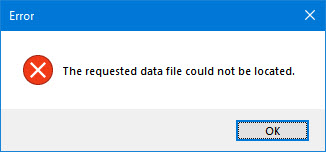
The error message looks like this:
How to Get Rid of the “The Requested Data File Could Not Be Located” Error in Trados Studio - 2

The message The requested data file could not be located appears when one is trying to start Trados Studio. It is extremely laconic: what file exactly it lacks, where it must be located, why it is needed—who knows.

This problem can occur in any version of Trados Studio, even 2021, usually after the upgrade installation. SDL states that they have already fixed this in Trados Studio 2021 SR1.

To get rid of this error:

1. Close Trados Studio (if you have miraculously managed to start it).

2. Search the hard drive for the following folder:

— if you have Trados Studio 2017:
C:\Users\%UserName%AppDataLocalSDLSDL Trados Studio14.0.0.0

— if you have Trados Studio 2019:
C:\Users\%UserName%AppDataLocalSDLSDL Trados Studio15.0.0.0

— if you have Trados Studio 2021:
C:\Users\%UserName%AppDataLocalSDLSDL Trados StudioStudio16

3. In that folder, find the file TranslationMemoryRepository.xml. That is the file Trados Studio was lacking and was too shy to provide its name. You can simply delete it, but you will want to save it just to be safe. The easiest way is to rename it by adding another extension to its name: TranslationMemoryRepository.xml.old.

4. Start Trados Studio. During the start, it must create another file with this name and work normally.

* * *

The process is described in detail here.

Recommended content
How to Get Rid of the “The Requested Data File Could Not Be Located” Error in Trados Studio - 3

How to Prevent Data Loss If Your CAT Tool Crashes

Useful tips about working with CATs If your CAT tool crashes and there is a risk of losing the completed portion of your translation, the first priority is to preserve the work you have already done. Only after securing the data should you attempt to fix the issue. Otherwise, you may have to redo the […]
How to Get Rid of the “The Requested Data File Could Not Be Located” Error in Trados Studio - 4

Why Word May Refuse to Check Spelling

Useful tips about working in Word Why Word may refuse to check spelling: Go to File → Options → Proofing, then select the Check spelling as you type checkbox and clear the Hide spelling errors in this document only checkbox (see image). Select the text you want to check, then verify that the correct language […]
How to Get Rid of the “The Requested Data File Could Not Be Located” Error in Trados Studio - 5

How the Ctrl + G Key Combination Works in Different Programs

The Ctrl + G shortcut is one of the most underrated navigation tools across modern applications. Whether you work in a browser, Word, Excel, or a CAT tool, this key combination lets you jump to a specific location instantly—a line, page, cell, segment, or the next match. Because many users rely only on Ctrl + […]
How to Get Rid of the “The Requested Data File Could Not Be Located” Error in Trados Studio - 6

How to Get Rid of Annoying Pop-Ups in Word

Microsoft Word is one of the most popular tools for writing, editing, and formatting documents. However, many users eventually face the same frustration: constant Word pop-ups that interrupt workflow when opening or closing files. These notifications may include error messages, template warnings, or add-in alerts. The good news is that in most cases, you can […]
How to Get Rid of the “The Requested Data File Could Not Be Located” Error in Trados Studio - 7

How to Configure the Enter Key Behavior in Passolo

Passolo software (also known as SDL Passolo) is one of the most user-friendly tools for software localization. However, even experienced Passolo translators may not realize that the Enter key behavior in this program can be customized. Adjusting this setting helps you prevent unwanted automatic confirmation of segments, maintain flexibility during translation, and improve your overall […]