Beyond the Headlines: Real Life and Business in Ukraine
At one of the language industry conferences, we were the only Ukrainian translation agency that came from Ukraine, and almost every colleague from Europe started asking us, “Are you really from Ukraine? Not relocated to the EU? How do you manage it? How do you even live there? Do you want to move here?” After being asked this about 20 times, we grew tired of it and realized how incorrectly some people perceive life and doing business in Ukraine. Let us elaborate on this (again).
What do you see in the news on TV, YouTube, and social networks? You see events when something happens: a Russian rocket destroying a residential building, ruined cities on the frontline, videos from trenches. And then you extrapolate, assuming that all translation companies (or any companies) in Ukraine are working among ruins, living in fear, and dreaming of leaving as soon as possible. This impression is reinforced by those Ukrainian migrants who left at the beginning of the full-scale war and remain mentally stuck in that initial shock. But real life is very different.
Yes, some cities have been destroyed by the Russian army. But Ukraine is big. On highways, under normal conditions, it takes 15 to 18 hours of driving without long stops to cross the country. In reality (with traffic, checkpoints, and road conditions), it can take 20 to 24 hours. Most of Ukraine is not in the combat zone, and people continue to live there normally.
Yes, this “normal” is sometimes interrupted by incoming Russian rockets and killer drones, sometimes hundreds of them. Some nights can be loud in cities like Kyiv, and tragically, occasionally Russian terrorists kill people. It’s heartbreaking for families and shocking for society, but if you look at the statistics, ten times more people in Kyiv die in road accidents. The main harm those drones cause is psychological: the constant feeling that you might be the next target. Yet after dozens or even hundreds of such nights, fear fades. You begin to take it as a kind of normal. At night, you may wake up swearing because explosions won’t let you sleep, maybe move away from windows (or even come closer to see), but in the morning, you wake up and go to work as usual.
In Kyiv, the chance of being killed is much lower than in most American or European cities. The homicide rate in Chicago is eight times (!) higher than in Kyiv. Some European cities have similar homicide levels. Yet we have never seen anyone ask businesses from those places such safety-related questions.
There’s a Ukrainian proverb that, if translated literally, says, “Fear has big eyes,” meaning risks are exaggerated when you don’t fully understand the situation. That instinct helped our ancestors survive: if they saw something move in the bushes, it could be a rabbit or a bear, and those who “saw” a bear survived. However, the point is that here in Ukraine, we know where the bears are present and where they are not, and we know where to hunt the rabbits.
In investment theory, there are the so-called “fear index” and “greed index,” modern versions of the bear and rabbit. (By the way, we also have the term “bear market,” when fear dominates greed and stock prices fall.) Professional investors know it’s best to buy undervalued assets when most people are afraid. Because when irrational fear is gone, the quality asset’s price rises.
Ukraine is now an undervalued asset. The war continues, and foreign businesses are afraid to invest. But at the same time, nowhere in the Western world will you find such growth potential. We stayed in Ukraine, overcame our fear, and gained a deeper understanding of it.
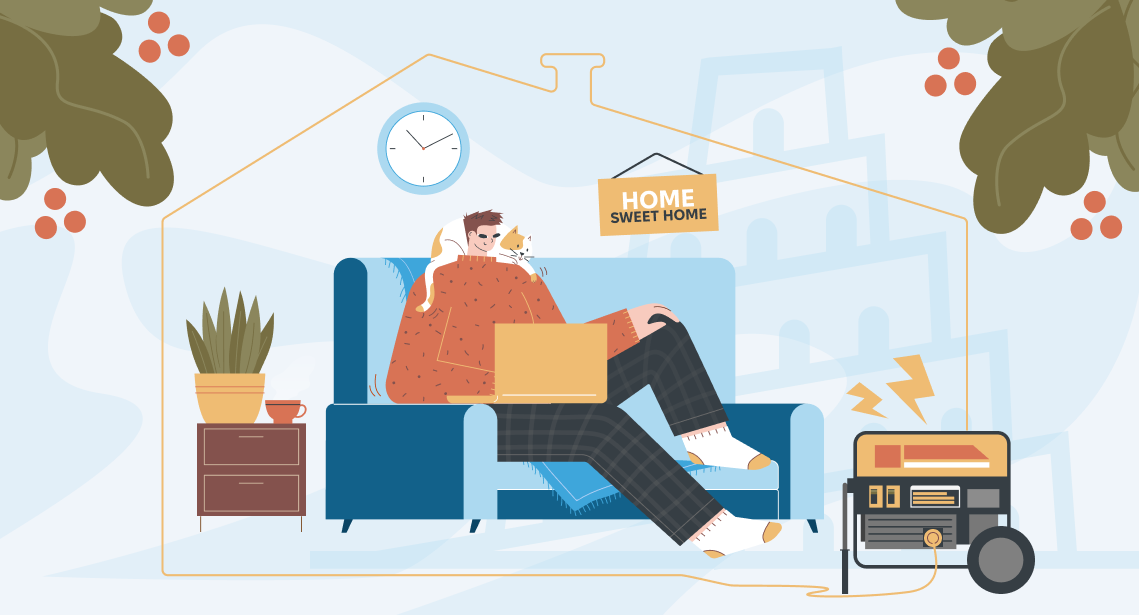
Kyiv and other Ukrainian cities are stressed, but not depressed. They are full of life: traffic jams, like in any big city, restaurants are packed, businesses are working and developing. We are no longer afraid of blackouts after Russian attacks; we have generators and batteries. You won’t find more resilient businesses than here in Ukraine.
And speaking of Ukrainian translation companies, those who stayed in Ukraine deliver better service than those who left. Immigrants carry a “snapshot” of the country as it was when they left, and the more time passes, the more disconnected they become from reality. Even language is changing. Many who stayed have switched to Ukrainian, while those who left continue to speak Russian just like before the full-scale war. Language evolves. What do you think will happen to the service quality of those Ukrainian translation services abroad? Inevitably, they’ll get stuck in the past.
So yes, as a Ukrainian translation services provider, we are staying in Ukraine, and we are not going to move abroad. For all the reasons above.
Recommended content

How to Run a Tender for Ukrainian Translation Services

How to Localize E-commerce Product Descriptions to Boost Global Conversion Rates

Translation vs. Transcription: What Is the Difference?

What Is Transliteration? How It Differs From Translation and Transcription