Continuous Localization: How to Sync Content Creation and Marketing in Global Campaigns
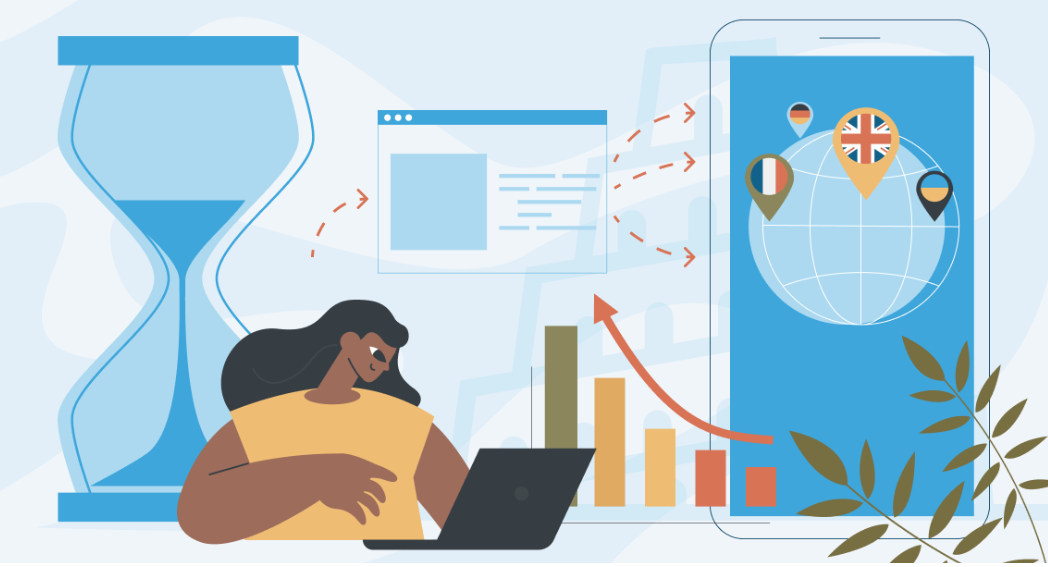
In global marketing campaigns, timing is your ultimate competitive advantage. Today, growth teams operate in fast-paced execution cycles, launching updates, refining offers, and deploying digital assets in real time to capture audience attention. However, when these campaigns expand internationally, a systemic gap appears between the speed of core content creation and the speed of regional execution.
Managing a multi-market rollout often becomes an operational compromise. While the central team moves fast, localized variations get trapped in long review cycles and fragmented workflows. By the time a regional landing page or ad campaign goes live, the original marketing context has already shifted. This disconnect doesn't just damage brand consistency; it causes brands to miss market windows and lose revenue to quicker, local competitors.
The fast-paced reality of modern global marketing
Modern digital marketing no longer operates on rigid, traditional, fixed schedules. Today, enterprise growth teams run on short, agile sprint cycles—constantly testing variants, adjusting pricing tiers, and launching dynamic campaigns. Marketing content is no longer a static asset; it is a living, shifting ecosystem.
In this hyper-connected landscape, international brands face three critical pressures:
- The reality of continuous updates: Product features pivot overnight, requiring immediate, synchronized copy adjustments across all channels.
- The speed of local competitors: Agile regional players react to market shifts instantly, capturing audiences while global brands wait for approvals.
- The risk of content depreciation: A high-converting campaign asset loses its economic value every day it spends trapped in a pipeline.
When regional execution relies on legacy processes, it creates operational gaps that hurt revenue. Staggered rollouts force brands to delay international campaigns and deliver inconsistent customer experiences. To stay competitive, localized content must keep pace with your core marketing team.
What is continuous localization for marketing teams
At its core, continuous localization integrates the translation process directly into your daily asset development cycle. Instead of treating translation as a separate, final step before a launch, it operates as an ongoing, automated loop that runs in parallel with creation.
For an agile marketing team, this model fundamentally changes how global content is handled:
- Incremental processing: The system translates small, individual updates as soon as they are approved, rather than waiting for large batches.
- Automated data flow: Content is automatically extracted from your tools, sent to translators, and pushed back to production without manual file exports.
- Simultaneous operations: While copywriters build new campaign elements, the translation workflow processes existing assets in near real time translation.
This approach transforms your marketing localization strategy into a fluid pipeline, ensuring your multilingual content strategy scales automatically alongside your brand updates.
Traditional vs. continuous localization: breaking the bottleneck
The shift from legacy methods to continuous localization is a transition from linear bottlenecks to an uninterrupted pipeline. Comparing these two models highlights how your choice of workflow directly impacts global efficiency, marketing operations, and time to market:
| Business impact | Traditional batch method | Continuous localization |
| Time to market | Staggered regional rollouts delayed by weeks. | Simultaneous worldwide launches in hours. |
| Brand consistency | High risk of outdated copy on local pages. | Brand voice consistency guaranteed globally. |
| Operational cost | High overhead due to manual marketing asset management. | Low overhead driven by automated workflows. |
| Content updates | Static assets that require new project requests. | Dynamic content updates synced in real time. |
Key benefits of syncing content creation with localization workflows
When you bridge the gap between asset development and your localization pipeline, you eliminate operational friction and accelerate global growth. Syncing your content creation workflow with an integrated translation system delivers several clear commercial advantages:
- Drastically reduced time to market: Simultaneous worldwide launches replace delayed, staggered regional rollouts.
- Compounded budget efficiency: Your system leverages a centralized translation memory, automatically recognizing previously approved phrases to lower costs over time.
- Continuous multilingual SEO: Dynamic updates to your primary website are immediately replicated across local subdomains, preserving organic search rankings globally.
- Protected global brand consistency: Automated pipelines ensure that your core identity and brand voice consistency remain intact across all markets, regardless of update frequency.
By unifying creation and translation, your agile marketing team stops managing manual file exports and focuses entirely on driving campaign performance and localization ROI.
Essential tools for building a continuous localization pipeline
To build a continuous workflow, you need an interconnected tech stack that completely replaces manual file transfers. A reliable automated pipeline requires three essential software layers:
- Your content system (CMS): A seamless content management system integration acts as your starting point. It stores all your master templates and digital marketing assets.
- Automation connectors: This layer monitors your tools for changes, extracts new text automatically, and routes it directly into your localization pipeline.
- A translation business management system (TBMS): This central hub handles vendor management, tracks project status, and applies translation memory to reduce costs.
When these three tools are fully connected, they eliminate human error from your marketing asset management. Your marketing operations become fully automated, allowing creation and translation to run smoothly in parallel.
Common challenges: maintaining brand voice across dynamic updates
Speed should never come at the expense of quality. While an automated pipeline removes rollout delays, using high-speed continuous translation services introduces two specific risks for your marketing localization:
- Lack of context: When text is broken into small, automated pieces, translators often work on phrases without seeing the full design or page layout. This can lead to literal translations that ruin your brand voice consistency.
- Missed cultural nuances: Fast systems focus entirely on rapid deployment, which can bypass the essential step of cultural adaptation. If automated text ignores local idioms, your campaign will fail to connect with regional buyers.
To solve this, marketing leaders must build quality guardrails into their tools. Providing translation vendors with visual previews, brand glossaries, and strict tone guidelines ensures that high-speed updates never damage your creative standards.
Practical steps to implement a continuous marketing localization strategy
Transitioning to an automated model requires a structured content ecosystem and agile workflow cycles. To build a successful marketing localization strategy that scales, follow these critical steps:
- Audit your tools: Ensure your current CMS and marketing platforms support API integrations to eliminate manual file exports.
- Establish brand guardrails: Upload style guides and glossaries into your platform before automating to protect global brand consistency.
- Integrate a central TBMS: Deploy a modern translation business management system to organize assets, automate data routing, and optimize costs.
- Embrace ongoing content cycles: Train your content creators to push copy in smaller updates, enabling your automated translation workflow to run smoothly.
- Track key performance metrics: Monitor your time to market and quality to continuously improve your workflows and boost your localization ROI.
By replacing stressful, batch-based launches with a connected pipeline, your agile marketing team can eliminate manual file transfers, minimize human error, and completely remove operational bottlenecks. Instead of wasting time on administrative coordination, your experts can focus entirely on high-impact growth experiments. This fluid infrastructure allows your brand to unlock faster international expansion, ensuring that every campaign asset moves seamlessly from creation to global deployment without a single day of delay.
Recommended content

How to Run a Tender for Ukrainian Translation Services

How to Localize E-commerce Product Descriptions to Boost Global Conversion Rates
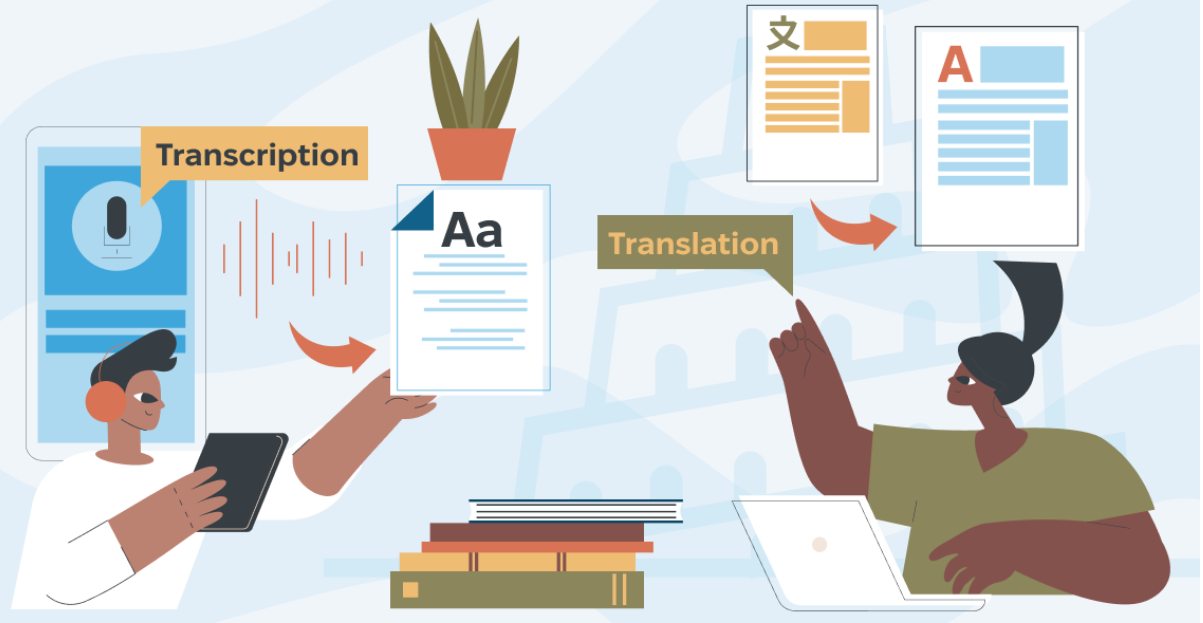
Translation vs. Transcription: What Is the Difference?

What Is Transliteration? How It Differs From Translation and Transcription