Localizing E-learning Platforms and Educational Content

In today's globalized digital environment, providing knowledge in a single language is no longer enough to ensure learner success. Effective e-learning localization services go beyond simple word-for-word translation, involving the deep adaptation and contextualization of learning resources to suit specific cultural needs, including the Ukrainian market. A well-structured e-learning localization process can help your team deliver engaging, native-feeling content to every learner.
Planning your e-learning localization project
A successful e-learning localization process begins long before the first sentence is translated. Unlike standard website translation, adapting educational programs requires keeping the learning logic intact. Proper planning ensures that your e-learning translation and localization services do more than just change the language; they make the course clear and relatable for every student.
Essential steps for a smooth e-learning translation and localization
- Analyze your audience: Start by evaluating your audience's cultural and linguistic expectations. Deciding between a formal academic tone or a modern, informal style is a critical part of localization in teaching, as it ensures the educational content feels natural and engaging to students in their specific environment.
- Ensure regulatory compliance: Different countries and regions have their own regulations and standards concerning e-learning content. Align your e-learning translation and localization with regional legal standards.
- Define learning goals: Decide whether your project requires a simple translation of instructions or a full e-learning content localization. This ensures that scenarios and case studies are adapted to feel natural and relevant to the local student.
- Establish core terminology: Develop a unified glossary of technical terms and interface elements early in the project. This ensures that the final e learning course translation remains consistent, preventing learner confusion and ensuring a seamless experience across all modules.
- Technical check: Confirm that your software handles Ukrainian characters correctly and allows for flexible layouts. Since text often grows in length after e-learning content translation, your design must accommodate these changes without breaking.
Content audit and prioritization
A structured e learning localization process begins with a thorough audit of all educational materials. Before starting, your team must categorize assets to determine which elements require deep cultural adaptation and which only need a basic e-learning content translation.
Typically, educational content includes the following elements:
- Learning modules: From simple slide-based courses to complex simulations.
- Video and audio: Educational videos and podcasts using either subtitles or voiceovers.
- Interactive elements: Clickable buttons, navigation menus, and interactive quizzes.
- Supporting documents: Training manuals, PDF guides, and worksheets for e-learning content translation.
- Visual multimedia: Graphics, animations, and diagrams with embedded text.
Not all of these elements require the same level of adaptation. To manage your resources effectively, you must prioritize your e-learning translation and localization by focusing on high-impact materials first. For instance, core instructional scenarios should undergo deep localizatio nto ensure maximum learner engagement, while technical manuals can often be handled with a more straightforward approach.
Adapting text, video, and audio
Once you have prioritized your assets, the next step is the actual translation. This phase requires a balance between technical precision and creative adaptation to ensure the final product feels native to the learner.
Dealing with text
The most common technical challenge in e-learning course translation is text expansion. When translating from English, many languages require significantly more space for the same meaning. For example, in the Ukrainian market, words can expand by 25–35%, often breaking buttons or overlapping images if not planned for.
Dealing with multimedia
Choosing how to handle audio and video is a critical decision in the e-learning localization process. Your choice between subtitles and voiceovers depends on the material's complexity and your specific goals.
- Subtitles vs. voiceovers: Subtitles are a cost-effective way of localizing e-learning and translation. However, professional voiceovers by native speakers are more effective for complex training as they reduce the learner's cognitive load.
- Script adaptation: Ensure your e-learning translation vendor adapts scripts for natural speech. Since translated text often expands, the narrator may need more time to cover the same visual slide.
Handling interactive elements and assessments
Interactivity transforms a static presentation into an engaging experience. When localizing e-learning and translation, your team must ensure that every button, trigger, and test question functions perfectly.
Assessments require more than a simple translation; they need a deep localization and contextualization of learning resources to feel authentic:
- Cultural context: Case studies and branching scenarios must reflect local professional norms.
- Cognitive clarity: Precise, structured language helps students focus on the subject matter rather than linguistic ambiguity.
Dealing with interface layout you should take into consideration that Ukrainian text often expands by 20–30%. During the e-learning localization process, ensure that interactive buttons like “Submit” or “Continue” have enough space to resize without overlapping other elements.
Quality assurance and review
The final stage of the e-learning localization process is Quality Assurance (QA). To deliver a polished product, your team or an experienced e-learning translation vendor must perform a multi-layered review.
| Review type | Focus area | Goal |
| Linguistic review | Grammar, tone, and terminology | Ensure localization in teaching feels natural and accurate. |
| Functional review | Buttons, triggers, and navigation | Verify that no interactive elements were broken during translation. |
| Visual review | Layout, fonts, and images | Check for text expansion (up to 30% in Ukrainian) and font rendering. |
| Compliance review | Regional laws and standards | Confirm the localization and contextualization of learning resources meets local regulations. |
Case studies of successful e-learning localization
Real-world data proves that a strategic e-learning localization process significantly improves educational outcomes. According to e-Learning Industry, localized training can increase learner engagement by up to 50%, a trend reflected in global success stories.
Global platforms and local impact
Education giants like Coursera and Duolingo have proven that professional e-learning localization services are the key to market penetration. For instance, Coursera’s massive initiative to localize thousands of courses into the state language has significantly increased accessibility for the Ukrainian market. Similarly, Duolingo’s focus on cultural relevance and a full localization and contextualization of learning resources continues to drive its daily active user growth in new regions.
Technical and safety training efficiency
Large-scale organizations often use a specialized e-learning translation vendor to ensure that safety and technical training are perfectly adapted. Their experience shows that precise e-learning content localization can reduce training time by 20% and minimize safety risks. As noted by Articulate, professional e-learning translation and localization is essential for maintaining high educational standards and ensuring that critical instructions are understood by every employee.
Key recommendations
To master the e-learning localization process, teams should focus on practical steps that make learning feel natural. Moving beyond simple translation helps avoid common mistakes and ensures your course works perfectly for every student.
- Understand your learners first: Before you begin, research the cultural background and expectations of your audience. A deep localization and contextualization of learning resources ensures that your examples, tone, and scenarios feel respectful and relevant to their daily lives.
- Design with flexibility in mind: Always leave extra space in your layouts. This proactive e-learning localizing strategy prevents broken buttons or overlapping text when words expand in length.
- Focus on what matters most: Spend your time on the localization and contextualization of learning resources that truly help students learn, such as real-life scenarios and practice tests.
- Keep your language consistent: Creating a clear list of technical terms before you start is vital for a professional e-learning localization. This stops learners from getting confused by different names for the same thing.
- Double-check everything: Always perform a final review of the language and the tech. A professional check ensures that localization in teaching meets your standards and that the course is easy to navigate.
In conclusion, successful e-learning localization is an ongoing journey of adaptation and improvement. By prioritizing the learner's cultural experience and technical comfort, you create a truly global educational environment where knowledge is accessible to everyone, regardless of their native language. Investing in high-quality e-learning translation and localization today builds the foundation for a more inclusive and effective digital classroom for years to come.
Recommended content

How to Run a Tender for Ukrainian Translation Services

How to Localize E-commerce Product Descriptions to Boost Global Conversion Rates
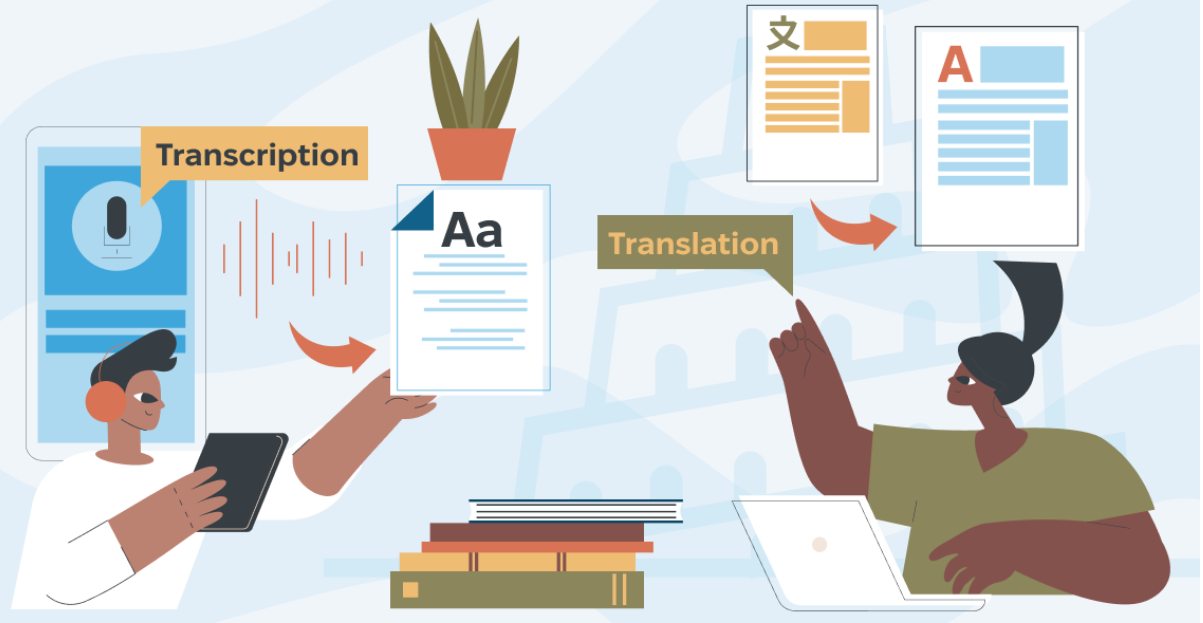
Translation vs. Transcription: What Is the Difference?

What Is Transliteration? How It Differs From Translation and Transcription