Top 10 Languages Spoken in the USA
Language diversity in the United States: overview
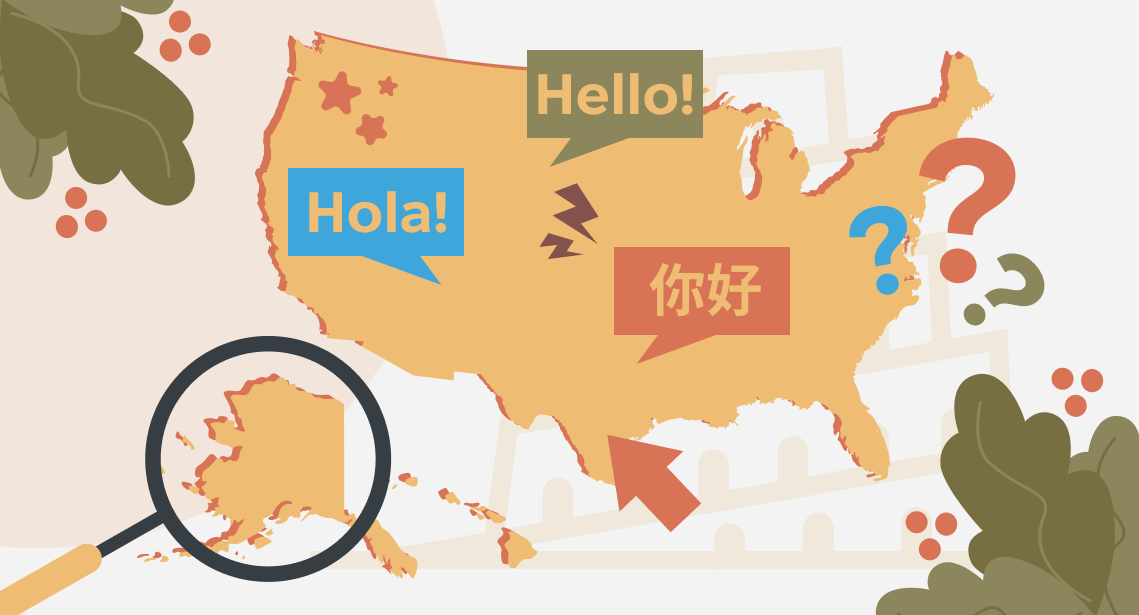
The United States is widely associated with English, but the country’s linguistic landscape is far more diverse than many expect. Although there are no official languages of the United States at the federal level, English functions as the de facto language of government, education, and business. Still, millions of people across the country use other languages at home, creating a multilingual environment shaped by immigration, heritage communities, and multicultural interactions.
According to recent U.S. Census Bureau data (2021–2023), over 70 million residents speak a language other than English at home, making the U.S. one of the world’s largest multilingual countries, even though discussions about the national languages of the USA often focus solely on English.
The most common languages spoken in the United States reflect both historical migration patterns and modern global mobility. Spanish is the clear leader, but Asian, Middle Eastern, and European languages also have strong representation. Linguistic diversity has practical implications too: bilingual education, multilingual marketing, public services, and cross-cultural communication all play key roles in today’s American society.
Below is an overview of the top 10 languages spoken in the USA (excluding English), based on recent demographic estimates and language-use trends.
Top 10 foreign languages in the United States
1. Spanish
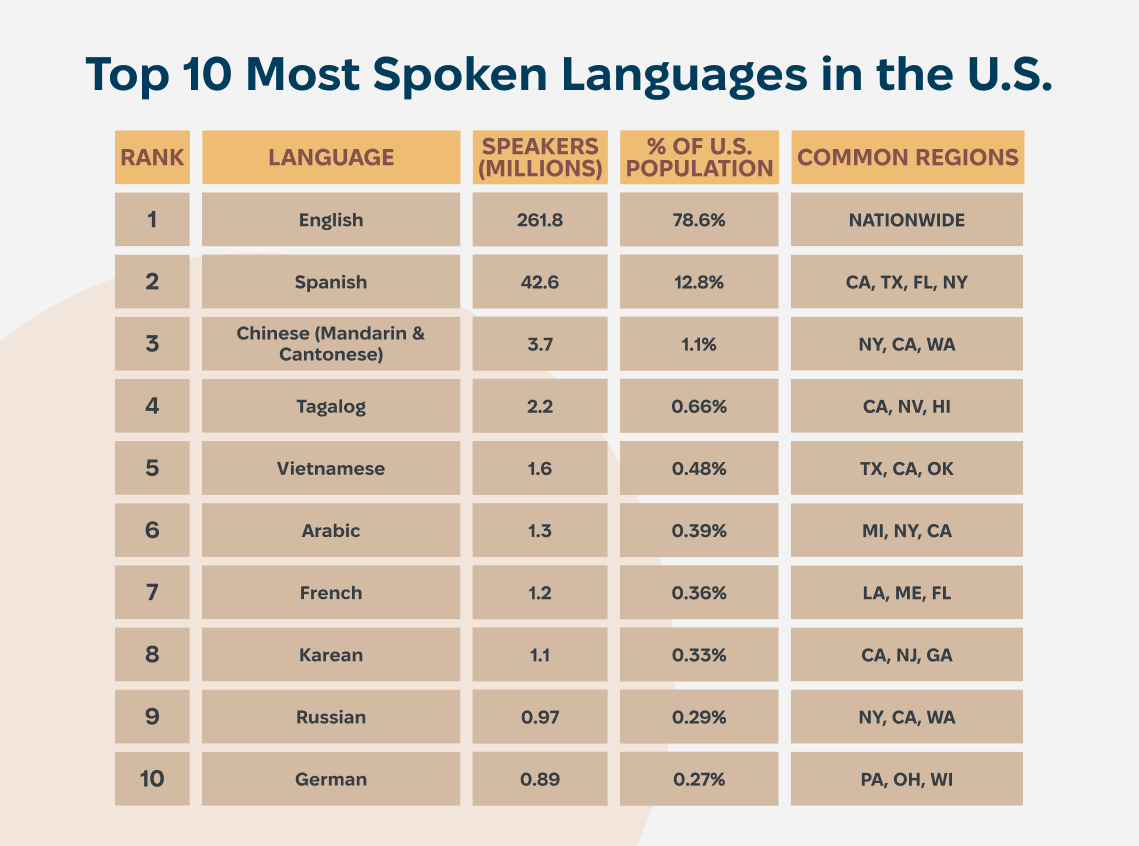
Spanish is the second most spoken language in the U.S., with about 43 million people speaking it at home. If we include heritage speakers and those who learned it as a second language, the number rises above 55 million. For anyone asking how many Americans speak Spanish, the answer is clear: the U.S. now has one of the largest Spanish-speaking populations in the world.
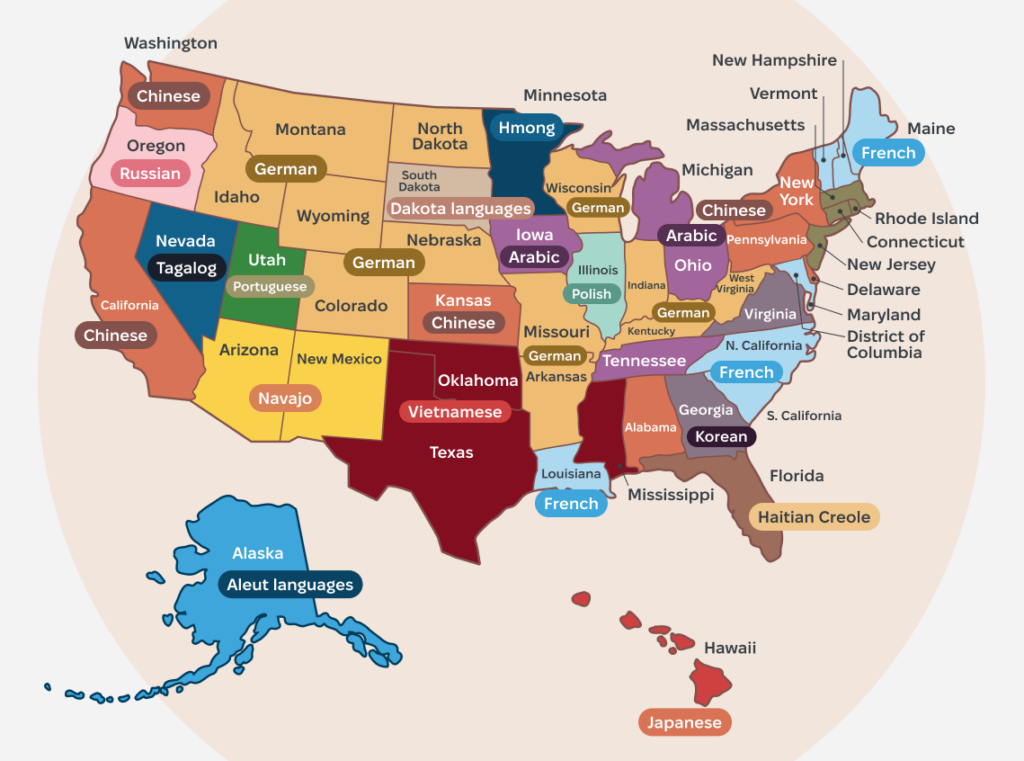
Spanish-speaking communities are deeply rooted across states like California, Texas, Florida, New York, Arizona, and Illinois. The language influences media, politics, education, and entertainment, making it the most significant non-English language in the country.
2. Chinese (Mandarin, Cantonese, and other varieties)
Chinese—including Mandarin, Cantonese, and other varieties—is the 3rd most spoken language in the U.S., with about 3.7 million speakers.
Major Chinese-speaking communities are centered in metropolitan areas such as New York City, the San Francisco Bay Area, Los Angeles, Seattle, and Houston. Immigration from mainland China and Taiwan has strengthened Mandarin, while Cantonese remains prevalent in older neighborhoods.
From tech entrepreneurs in Silicon Valley to finance professionals on Wall Street, Chinese serves as a bridge between East and West. It’s widely used in trade, real estate, tourism, and education, while also sustaining family traditions, with elders passing down language, recipes, and cultural knowledge to younger generations.
3. Tagalog (including Filipino)
Tagalog, including standardized Filipino, is spoken by around 2.2 million people in the U.S. It is among the most used languages in the U.S. due to a long history of Filipino immigration, especially after the 1960s.
Large Tagalog-speaking communities live in California (particularly Los Angeles and the Bay Area), Nevada, Hawaii, New Jersey, Washington, and Texas. The strong presence of Filipino professionals in healthcare, hospitality, and the military underscores the importance of the language in American society.
4. Vietnamese
Around 1.6 million people speak Vietnamese in the country. Vietnamese communities formed largely after the 1970s and continue to grow through immigration and multigenerational households.
Cities like Houston, San Jose, Los Angeles, and New Orleans have some of the largest Vietnamese-speaking populations. The language plays a central role in cultural and business networks across these regions.
5. Arabic
Arabic is one of the fastest-growing languages in the United States, with about 1.4 million speakers. It includes multiple dialects, such as Levantine, Egyptian, Gulf, Iraqi, Maghrebi, and Modern Standard Arabic.
Arabic-speaking communities are significant in Michigan (the Detroit and Dearborn areas), New York, New Jersey, California, Ohio, and Texas. Immigration and the growth of second-generation bilingual families drive the increasing use of Arabic.
6. French (including Haitian Creole and Louisiana French)
If you are wondering how many people in the U.S. speak French, it ranks consistently among the top ten languages, with about 1.2 million speakers. It has deep regional roots in Louisiana, Maine, Florida, and parts of the Midwest, remaining a heritage language in Cajun, Creole, and Haitian communities, especially in Florida and New York.
Today, French appears in bilingual classrooms, international schools, legal and social services, and major tourist areas. It’s also essential in immigration cases involving French-speaking African countries and in humanitarian work. From New Orleans jazz traditions to Montreal-style bakeries in Vermont, French remains a vibrant cultural and linguistic presence across the U.S.
7. Korean
Korean is spoken by about 1.1 million people in the U.S., with strong communities in California, New York, New Jersey, Georgia, and Washington. It remains one of the most stable heritage languages thanks to community schools, churches, and media.
Beyond cultural preservation, Korean is also a language of innovation used in startups, e-commerce, and digital media. Korean American communities emphasize education and small business growth, and the language is central to daily life — from family-run services to churches and cultural groups. Korean media, from K-dramas and K-pop to tech content, now shapes global culture, yet for many families, Korean is still the language of home, shared meals, and tradition.
8. Russian
About 1 million U.S. residents speak Russian at home, including immigrants from Russia, Ukraine, Belarus, Kazakhstan, and other post-Soviet states. Russian-speaking communities are especially concentrated in New York—particularly Brighton Beach—as well as New Jersey, Illinois, California, and Washington, where the language often unites people from diverse backgrounds.
In neighborhoods like Brighton Beach, Cyrillic signs and Russian conversations are part of daily life, and the language plays a key role in immigration support, elder care, and community services. Russian-speaking Americans include Jewish families from the former Soviet Union, along with many scientists, engineers, and small business owners. The language remains central in churches, community media, and cultural festivals, helping preserve identity while supporting new beginnings in the U.S.
9. Portuguese
Portuguese is spoken by close to 1 million people in the United States. Speakers come primarily from Brazil and Portugal, as well as from Cape Verde and other Portuguese-speaking regions.
Portuguese-speaking communities are strong in Massachusetts (especially around Boston), Florida, New Jersey, and California. The language continues to grow due to Brazilian immigration and cultural influence.
10. German
German, once one of the dominant non-English languages in the United States, is spoken today by an estimated 850,000 to 900,000 people. Although the number has declined due to assimilation, German remains relevant in education, heritage communities, and cultural traditions.
The language has historical significance in states like Pennsylvania, Ohio, Wisconsin, and Texas—regions where German-speaking settlers shaped local culture for generations.
Language demographics in the USA: additional insights
English proficiency and bilingualism
A key question often asked is how many people are bilingual in the United States. Current estimates suggest that about 1 in 5 Americans can speak more than one language. In states with large immigrant populations, bilingualism rates are even higher.
Heritage and community languages
Many communities maintain heritage languages through:
- weekend language schools,
- cultural organizations,
- bilingual education programs,
- ethnic media (TV, radio, newspapers, online platforms).
These efforts help maintain linguistic diversity and ensure that languages continue to thrive across generations.
Why language diversity matters
Language diversity affects:
- education policy,
- healthcare and public services,
- political outreach,
- workforce development,
- business and marketing strategies.
Understanding U.S. language spoken patterns is essential for organizations that want to communicate effectively with multicultural audiences.
Final thoughts
The United States is one of the world’s most linguistically diverse countries. While English remains the most widely spoken language, millions of Americans use Spanish, Chinese, Tagalog, Vietnamese, Arabic, and other languages in daily life. The top 10 languages spoken in the USA reflect the nation’s multicultural identity and dynamic demographic trends, from Indigenous languages to immigrant communities spanning every continent.
Discussions of the national languages of the USA and language policy often overlook this rich multilingual reality. Yet understanding language diversity is more than academic—it is essential for creating inclusive classrooms, reaching diverse markets, and delivering equitable healthcare and legal services.
By tracking how language use evolves, organizations can build more responsive systems across education, business, and digital platforms, ensuring communication connects with people in the language they understand best.
Recommended content
The Most Popular Localization Languages

Tips for Translating Multimedia Content Without Losing Tone or Humor
Glossary Creation for Translation Projects: Why It Matters

Localizing E-learning Platforms and Educational Content