What Is Internationalization (i18n)? A Practical Guide for Global Products
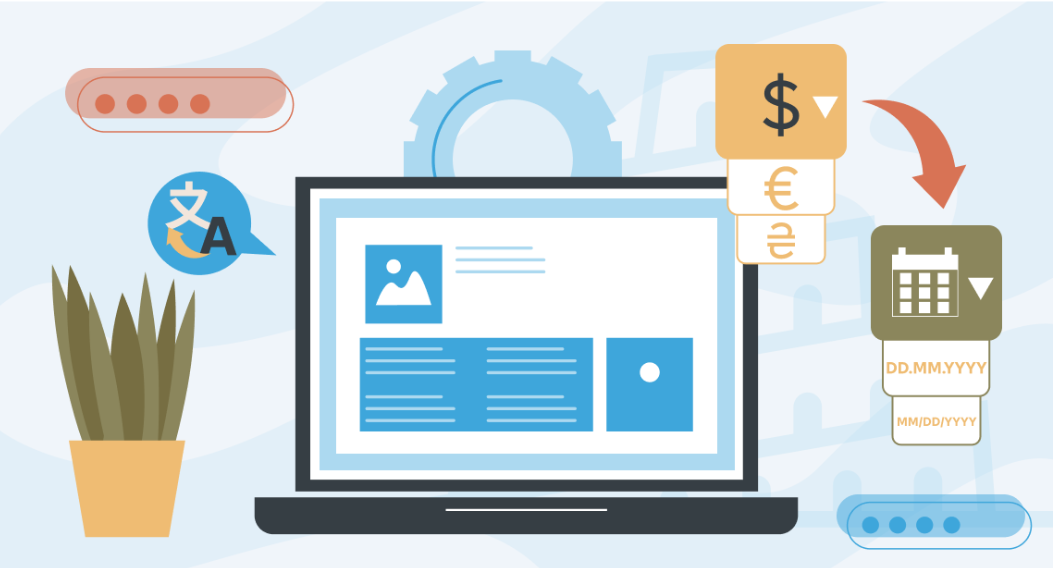
Launching a digital product overseas often sounds as simple as translating text into another language. However, companies discover that building a global audience requires far more than that; it demands an engineering foundation that welcomes diverse locales.
What internationalization (i18n) is
Internationalization (i18n) is the practice of designing and developing software so that it adapts to diverse regional, linguistic, and cultural environments without requiring engineering rewrites.
The real internationalization meaning is simple: creating digital products that travel across borders without breaking. Instead of hardcoding labels, dates, or currency symbols directly into the program, developers create flexible slots that can hold any value.
Think of it like a printed form with blank fields. The form itself stays the same, but the app fills in those blanks using a separate file tailored to each user:
- If someone opens the app in Germany, it loads words in German, displays dates as DD.MM.YYYY, and uses the € symbol.
- If someone opens it in the US, it pulls in English text, displays dates as MM/DD/YYYY, and shows $.
This way, developers never have to rewrite or recompile the entire application for each new country. They simply hand a clean file of text and regional rules to translators and drop the results right into place.
What i18n means
What is i18n? The i18n meaning comes from a simple software engineering shortcut. The letter «i» marks the start of the word, the letter «n» marks the end, and eighteen letters sit in between. Developers use this shorthand because typing out the full word over and over again gets tiring fast.
Internationalization vs. localization: What's the difference
Internationalization sets up the technical frame, while localization fills that frame with the actual words, images, and cultural context for a specific market.
What internationalization prepares a product to do
A good internationalization strategy removes technical roadblocks before an expansion even begins. It teaches the software to stretch button sizes for longer words, process unfamiliar postal codes, and format currencies automatically.
What localization adapts for a specific market
While the framework takes care of the mechanics, localization tailors the human experience. It shapes local humor, replaces regional imagery, ensures legal compliance, and connects local payment options.
| Feature | Internationalization (i18n) | Localization |
| Primary goal | Prepares technical foundations for global readiness | Adapts user-facing content for a specific region |
| Main owners | Software architects and engineers | Translators and regional marketers |
| When it happens | During early core development stages | Continuously as the product enters new markets |
| Key focus areas | Data formats, layout flexibility, and resource files | Tone of voice, cultural nuances, and regulations |
How i18n and localization work together
Both of them rely on each other to succeed. When teams agree on a clear internationalization definition from day one, localizers can do their job without breaking the interface or asking programmers to rebuild pages from scratch.
What i18n includes
Practical internationalization covers everything needed to let an interface shift languages and regional habits without unexpected glitches.
Separating translatable content from code
Visible copy is completely detached from the core program logic. Text lives inside dedicated resource files like JSON or YAML, so translation teams can update words without touching the code.
Supporting languages and locales
Smooth i18n translation requires complete Unicode support across every database and interface. Systems must handle left-to-right languages just as easily as right-to-left scripts like Arabic or Hebrew.
Designing flexible layouts for text expansion
A truly internationalized product builds user interfaces with enough flexibility to accommodate different languages without breaking the visual hierarchy. Because translated copy can expand by up to 40%, navigation bars and action buttons must rely on dynamic containers rather than rigid ones, giving text plenty of room.
Internationalization examples in digital products
Looking at real software helps clarify how these systems operate in practice:
- Accounting software: A well-built tool automatically switches between dots and commas for decimals, adjusts fiscal year dates, and supports symbols like ¥ or £ without miscalculating totals.
- Social messaging apps: Global chat platforms handle non-Latin characters naturally, adjust time displays across dozens of zones, and adjust bubble sizes so text never gets cut off.
Why product internationalization matters
Imagine this i18n example: European online shopping platform expands into new markets after years of focusing only on its home country. Because the original team had no early i18n implementation, the launch caused several issues.
First, checkout forms broke for international shoppers. Because the sign-up field strictly required a single last name written only in Latin letters, the platform rejected standard naming conventions used across Spain and East Asia.
The layout also cracked under the weight of translated text. German words ran much longer than their English equivalents, causing buttons to overflow their containers and pushing the final payment button completely out of view.
Financial records suffered behind the scenes as well. The database mixed up periods and commas as decimal separators, which led to incorrect billing amounts.
Prioritizing product internationalization early saves enormous amounts of time and budget as a digital service grows.
Internationalization process: from planning to implementation
Moving from an idea to a fully adaptable platform follows four practical steps:
- Clean up code and assets: Developers separate text from core logic and make room in the interface for longer words, ensuring new languages snap into place without redesigns.
- Start with low-risk markets: Expand first into regions with similar linguistic roots or familiar business rules, keeping the launch predictable.
- Run small test launches: Releasing a quiet pilot to a small group of local users reveals hidden formatting and layout errors before the full product launch.
- Collect and apply feedback: Tracking how early international users interact with forms and menus highlights exact spots where translations or regional rules need adjustments.
i18n best practices for global products
Building software for a global audience relies on simple habits:
- Use UTF-8 everywhere: Set databases and servers to UTF-8 to prevent strange gibberish characters from appearing on screens.
- Avoid splicing sentences: Build whole sentences with variable placeholders rather than joining separate pieces of text together, which often breaks grammar rules in other languages.
- Build flexible layouts: Design buttons and text boxes with enough breathing room to expand by up to 40% without breaking the design.
- Automate quality checks: Set up background checks that catch accidentally hardcoded text strings before any update goes live.
i18n tools and services
These systems are not built from scratch; companies should use i18n tools that automate the hardest parts of the job.
Specialized i18n tools connect project repositories directly to localization workflows. Meanwhile, dedicated i18n services audit codebases for global readiness, while full-scale internationalization services ensure external linguists always receive clean files.
Conclusion
Internationalization is the backbone of any product that aims to scale globally. It turns potential technical disasters into a smooth routine by decoupling code from content and respecting regional differences from day one.
When software is built with flexibility in mind, localization becomes fast and cost-effective. Investing in internationalization framework early saves teams from painful rewrites, protects company budgets, and ensures every user feels right at home.
Recommended content

What Is Transliteration? How It Differs From Translation and Transcription

What Is a Lingua Franca? Meaning, Examples, and Common Uses
How Many Languages Are There in the World?
What Is a Language Family? Major Language Families Explained