our blog

How to Turn On the Display of Hidden Text in Trados Studio

How to Turn On the Display of Hidden Text in Trados Studio - 1

The hidden text allows us to rectify hidden issues

Seasoned translators know that while working with a text, they should display hidden text: it often conceals problems that are not visible in an “ordinary” text.

We’ve already spoken of how to display hidden text in Word and why it is worth doing that. Today we’ll learn how to do it in Trados Studio.

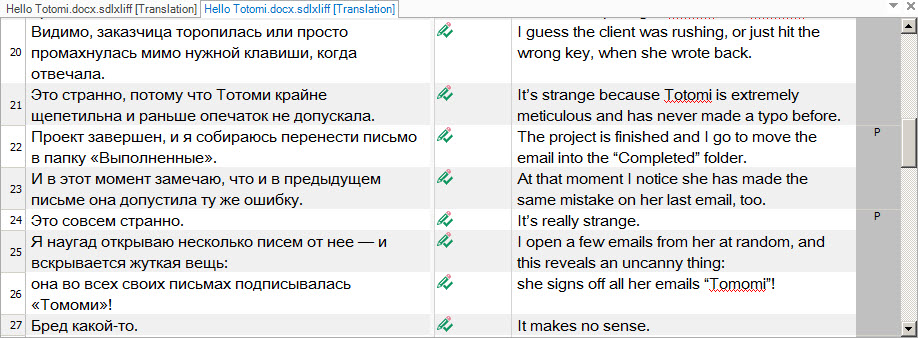
An “ordinary” text in Trados Studio looks something like this:
How to Turn On the Display of Hidden Text in Trados Studio - 2

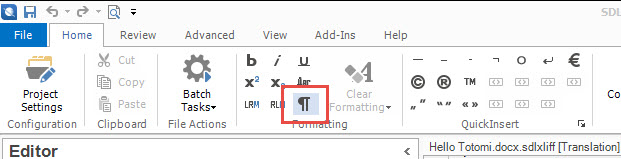
The Home tab contains the same key you see in Word, but the name here is different—Show Whitespace Characters:
How to Turn On the Display of Hidden Text in Trados Studio - 3

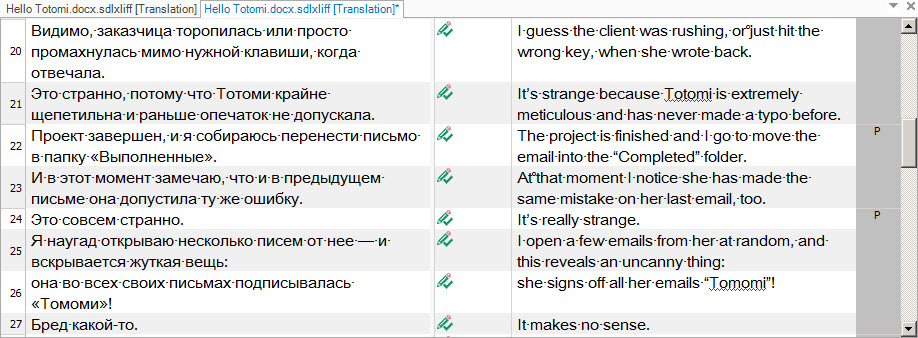
After pressing the key, you’ll start to see hidden characters in the text—all “ordinary” spaces get replaced with dots, and non-breaking spaces—with circles:
How to Turn On the Display of Hidden Text in Trados Studio - 4

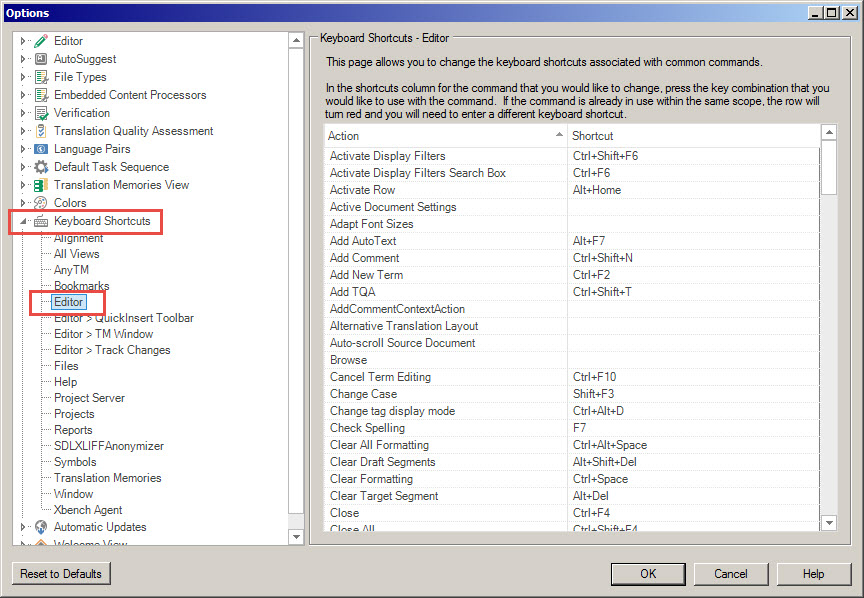
In Word, you can show or hide characters with the help of the Ctrl + Shift + 8 key combination. In Trados Studio, it doesn’t work by default, but it can be activated manually. To do this, select File > Options. The Options dialog box appears. On the left panel of the box, click Keyboard Shortcuts, then choose Editor:
How to Turn On the Display of Hidden Text in Trados Studio - 5

Find Show Whitespace Characters in the list of commands on the right panel of the box, place the cursor inside a cell of the Shortcut column, press Ctrl + Shift + 8 (or you can choose any key combination that you would like to use—but be sure that it’s not in use for another command in Trados Studio) and select ОК.

Recommended content
How to Turn On the Display of Hidden Text in Trados Studio - 6

How to use the ampersand and how is it different from and

A little bit on how & is different from and The ampersand is a ligature that the Latin conjunction et, which means and, has been transformed into. Once upon a time, the ampersand was even considered the 27th letter of the alphabet. When pronouncing letters in the alphabet, it was ended with the words and […]
How to Turn On the Display of Hidden Text in Trados Studio - 7

How to split a large Trados Studio file into multiple parts

About splitting a large file into multiple parts How to split a large Trados Studio file into several parts: ➕ The plugin is free, simple, and effective. Trados Studio is not needed at all. ➖ It is better to use it only for splits, there are problems with merges. * * * ➕ Always works […]
How to Turn On the Display of Hidden Text in Trados Studio - 8

T9N, L10N, I18N, G11N, C13N, M17N, V8N

Some slang abbreviations from the localization field Let’s check some slang abbreviations from the localization field. All of them are based on the principle of “taking the first and last letters of a word, cutting out the middle, and writing the number of the cut out letters instead.” These terms are vague, and their meanings […]
How to Turn On the Display of Hidden Text in Trados Studio - 9

How to enter characters that are not on the keyboard

About ways to enter characters that are not on the keyboard If you’re working on Windows and need to type something that isn’t on the keyboard, press Win + ;. A small window will appear where you can choose the type of character you want (regular, emoji, or smiley) at the top and specify it […]
How to Turn On the Display of Hidden Text in Trados Studio - 10

How to fix the “Value cannot be null. Parameter name culture” error in Trados Studio

About another error in Trados Studio If you create a project in Trados Studio and when asking to see a preview of the file, it says that you are not cultured enough, Value cannot be null. Parameter name: culture —ignore it: the project will be created properly and everything will be fine. It’s only the […]