our blog

How to Turn On the Display of Hidden Text in Trados Studio

How to Turn On the Display of Hidden Text in Trados Studio - 1

The hidden text allows us to rectify hidden issues

Seasoned translators know that while working with a text, they should display hidden text: it often conceals problems that are not visible in an “ordinary” text.

We’ve already spoken of how to display hidden text in Word and why it is worth doing that. Today we’ll learn how to do it in Trados Studio.

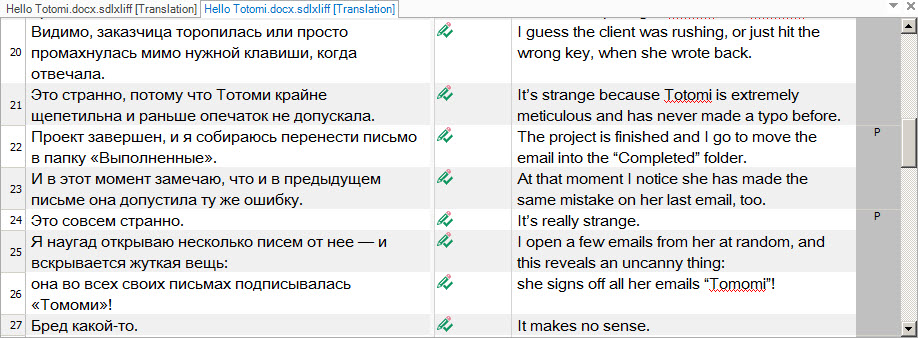
An “ordinary” text in Trados Studio looks something like this:
How to Turn On the Display of Hidden Text in Trados Studio - 2

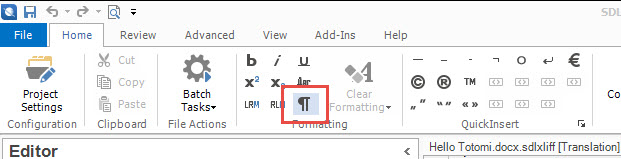
The Home tab contains the same key you see in Word, but the name here is different—Show Whitespace Characters:
How to Turn On the Display of Hidden Text in Trados Studio - 3

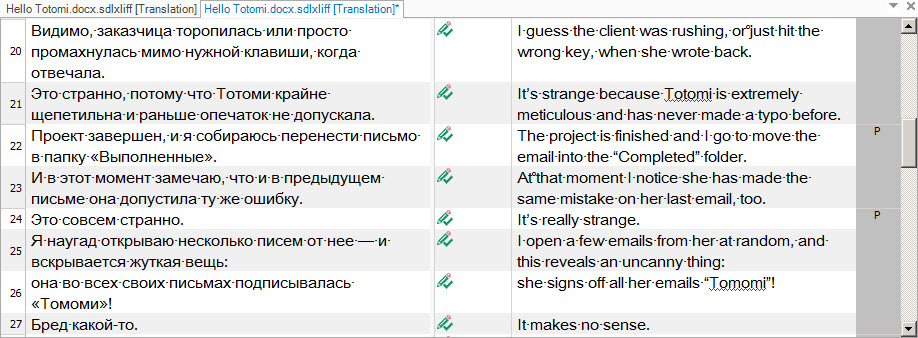
After pressing the key, you’ll start to see hidden characters in the text—all “ordinary” spaces get replaced with dots, and non-breaking spaces—with circles:
How to Turn On the Display of Hidden Text in Trados Studio - 4

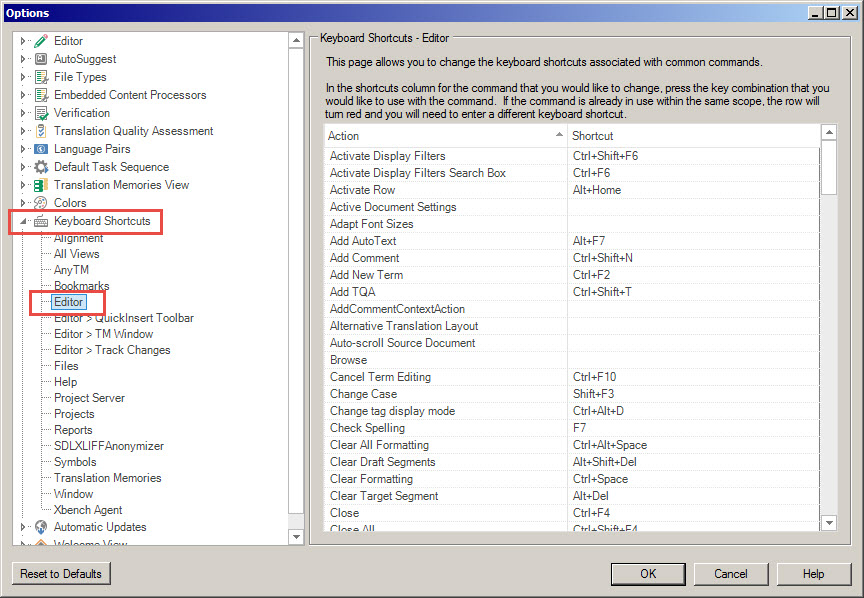
In Word, you can show or hide characters with the help of the Ctrl + Shift + 8 key combination. In Trados Studio, it doesn’t work by default, but it can be activated manually. To do this, select File > Options. The Options dialog box appears. On the left panel of the box, click Keyboard Shortcuts, then choose Editor:
How to Turn On the Display of Hidden Text in Trados Studio - 5

Find Show Whitespace Characters in the list of commands on the right panel of the box, place the cursor inside a cell of the Shortcut column, press Ctrl + Shift + 8 (or you can choose any key combination that you would like to use—but be sure that it’s not in use for another command in Trados Studio) and select ОК.

Recommended content
How to Turn On the Display of Hidden Text in Trados Studio - 6

How to fix «Failed to save target content: Cannot find central directory» error in Trados Studio
About the ways to fix the issue in Trados Studio When trying to generate a translated document in Trados Studio, this error sometimes occurs: Failed to save target content: Cannot find central directory. It happens because of corrupted data in the source file used to create and store the SDLXLIFF file you translated in Trados […]
How to Turn On the Display of Hidden Text in Trados Studio - 7

How to fix «Failed to open return package» error in Trados Studio
About another issue in Trados Studio When importing a package, Trados Studio might say that it Failed to open return package, because it contains a project that does not exist in your setup. That it’s not a Trados Studio issue, but yours: you tried to import a return package for a project Trados Studio doesn’t […]
How to Turn On the Display of Hidden Text in Trados Studio - 8

Lorem ipsum

About the dummy or placeholder text Lorem ipsum is a meaningless Latin text, so-called dummy or placeholder text, which is used to estimate how a layout will look with text presented in a particular font. This is usually done by designers, but it is also needed for pseudo-localization. This text became widely popular due to […]
How to Turn On the Display of Hidden Text in Trados Studio - 9

You sell not only the translation, but also your expertise

Some thoughts and reflections Modern technical translators have to be inquisitive. They don’t even have to; they must. The tools they use today will become unrecognizable in a few years. New programs and methods emerge, existing knowledge becomes outdated, and translators who are not interested in anything beyond the text are being outpaced by more […]
How to Turn On the Display of Hidden Text in Trados Studio - 10

Two stories about ChatGPT

Interesting facts about AI In early April 2024, artificial intelligence expert Jeremy Nguyen shared a thing he noticed: for some reason, the unremarkable word delve was used unexpectedly often in the texts generated by ChatGPT. So much often that Paul Graham, co-founder of Y Combinator and noted IT evangelist, considers the presence of this word […]