Clinical Trial Translation: Why Accuracy is a Matter of Life and Death

In multinational clinical research, linguistic precision is a hard operational variable, not a soft administrative task. While sponsors invest billions in protocol design and data accuracy, a single translation variance can compromise years of research. For medical directors and CROs, treating clinical trial translation as a secondary priority introduces systemic risks that can invalidate critical data and delay regulatory approval timelines. Ultimately, safeguarding the fidelity of scientific data across borders is what protects clinical endpoints, patient safety, and corporate liability.
The high stakes of medical translation accuracy in global clinical trials
Maintaining data uniformity across international investigational sites is a core operational requirement in multicenter clinical research. When a study protocol is deployed across multiple geographic regions, cross-site standardization determines the validity of the outcomes. Ambiguities or terminology variations in investigator communications frequently result in protocol deviations, which directly compromise the statistical utility of the collected data.
For clinical operations management, relying on general translation agencies or local medical staff for localization introduces severe risks. A single error in translating eligibility criteria can lead to enrolling the wrong patients into a study. As a result, this mistake distorts the research data, skews statistical outcomes, and completely invalidates the clinical endpoints. Mitigating these non-compliance risks requires documented quality assurance processes that preserve source document accuracy and guarantee continuous data integrity in trials.
Key patient-facing documents: How to translate informed consent forms (ICFs) without errors
Patient safety always comes first in clinical research. For international trials, the informed consent process must be completely transparent. This means that participants must fully understand the study procedures, requirements, and potential risks before signing any document. To achieve this, sponsors must adapt all subject recruitment materials and medical forms into clear, local languages.
When clinical text is translated poorly, the consequences for patient understanding are immediate. The table below illustrates how everyday translation mistakes create critical risks:
| Original document clause (English) | Mistranslation risk in local language | Direct impact on the informed consent process |
| “You have the right to withdraw.” | Translated as “You have the right to draw back.” | Patients do not understand that they can stop participating in the trial whenever they want. |
| “Do not take other medications.” | Translated as “Do not take alternative pills.” | Patients think they can still take ordinary prescription drugs, risking dangerous drug interactions. |
| “You may receive a placebo.” | Translated as “You will receive fake medicine.” | Patients think the trial is illegal or dangerous, refusing to sign the form. |
If a patient cannot understand the safety warnings because of a flawed translation, the sponsor faces serious ethical and legal issues. Clear and accurate communication is not just a regulatory rule; it is the foundation of all patient safety protocols.
Managing risks in pharmaceutical document translation for sponsors and clinicians
Internal study frameworks demand strict scientific precision. Minor translation errors in technical documentation can mislead clinical sites, corrupt data accuracy, and delay regulatory timelines. Therefore, professional pharmaceutical document translation must ensure absolute accuracy across all critical assets.
Misinterpreting safety metrics or dosing histories in the investigator brochure leads directly to incorrect drug administration, creating immediate medical and legal liabilities. Similarly, flawed translations during adverse event reporting mask critical safety signals, making it impossible to detect toxic reactions or identify vital patterns across multinational trial populations.
To mitigate these risks, CROs and sponsors must deploy strict medical terminology management. Utilizing a centralized translation memory for pharma prevents dangerous phrasing shifts across protocols, case report forms, and safety updates.
Implementing a rigorous linguistic validation process to protect data consistency
When clinical programs evaluate subjective metrics like pain scales or quality-of-life questionnaires, traditional translation workflows fail. Subtle differences in how cultures describe physical or emotional symptoms can easily alter patient responses. To prevent this, sponsors must utilize a specialized linguistic validation process to harmonize patient-reported outcomes across all international research sites.
This methodology removes cultural misunderstandings from the equation through strict, data-focused steps:
- Forward translation: Two independent native linguists perform the initial forward translation to convert clinical questions into natural, culturally accurate language.
- Back translation: Separate experts perform a blind back translation of medical documents to compare the new text with the original source and flag any shifts in meaning.
Focusing purely on the science of language ensures that data collected in different countries remains uniform. This rigorous approach protects the statistical validity of the study and guarantees that global patient answers are accurate, comparable, and ready for clinical analysis.
Cognitive debriefing: ensuring patient questionnaires (PROMs) make sense locally
Even when a clinical text passes translation checks, literal accuracy does not guarantee that a local patient will interpret a question correctly. To solve this gap, sponsors execute a final validation step known as cognitive debriefing, testing the reconciled questionnaire on a small group of native speakers from the target population. This practical test requires participants to explain the questions in their own words, revealing whether terms describing pain, mood, or physical limitations are clear or if they cause confusion that could distort study results.
Skipping this field-testing phase directly compromises the quality of patient-reported outcomes translation. If subjects misunderstand a scale or an evaluation metric due to subtle cultural differences, they provide inaccurate answers. For CROs and sponsors, this minor cultural confusion pollutes the clinical database, lowers the statistical value of the research, and ultimately ruins the credibility of global patient-reported insights.
Regulatory compliance: navigating FDA, EMA, and global standardization standards
Linguistic accuracy is a formal legal requirement enforced by global health authorities. When sponsors submit data for market approval, regulatory bodies review clinical documentation just as strictly as biochemical data. Utilizing an unverified workflow for regulatory medical translation introduces severe compliance risks that can compromise years of research during the final review phase.
Both the Food and Drug Administration and the European Medicines Agency have strict localization policies. Failure to meet FDA compliance translation rules or EMA regulatory standards leads directly to official audit failures, warning letters, and immediate holds on drug applications. For Pharma B2B sponsors and CROs, these regulatory rejections cause devastating operational consequences, including missed launch dates, legal penalties, and millions of dollars in lost market revenue.
The financial and human cost of translation errors in medicine
The consequences of inaccurate translation go far beyond administrative delays. When a study is paused or audited due to flawed documentation, sponsors and CROs face immediate and severe consequences:
- The financial toll: A single linguistic error can stall a clinical trial, costing sponsors massive daily losses in delayed market entry, while wasting valuable capital on site maintenance and protocol remediation.
- The human cost: When technical materials bypass a certified medical linguist, patient safety is immediately put at risk, potentially leading to incorrect dosing, dangerous drug interactions, or severe clinical complications.
Ultimately, investing in professional clinical research translation services is not an optional operational expense. It is a critical safeguard that protects both human lives and corporate budgets from catastrophic failure.
Best practices: How to choose a certified medical translation partner
Mitigating linguistic risks in clinical research requires moving away from general translation providers. For medical directors and CROs, selecting a specialized CRO translation vendor is a strategic decision that directly protects data integrity.
To ensure compliance and patient safety, a qualified partner must meet the following criteria:
- Subject matter expertise: Every document must be handled exclusively by a certified medical linguist with documented training and experience in specific therapeutic areas.
- Technological infrastructure: The vendor must deploy robust medical terminology management tools and centralized translation memory systems to maintain absolute consistency across all global studies.
- Validated quality workflows: The partner must follow strict multi-step protocols, including forward-and-back translation cycles, validation processes, and rigorous quality controls.
Enforcing these technical standards allows sponsors to eliminate operational errors during documentation localization, ensuring full compliance with international clinical trial protocols.
Recommended content

How to Run a Tender for Ukrainian Translation Services

How to Localize E-commerce Product Descriptions to Boost Global Conversion Rates
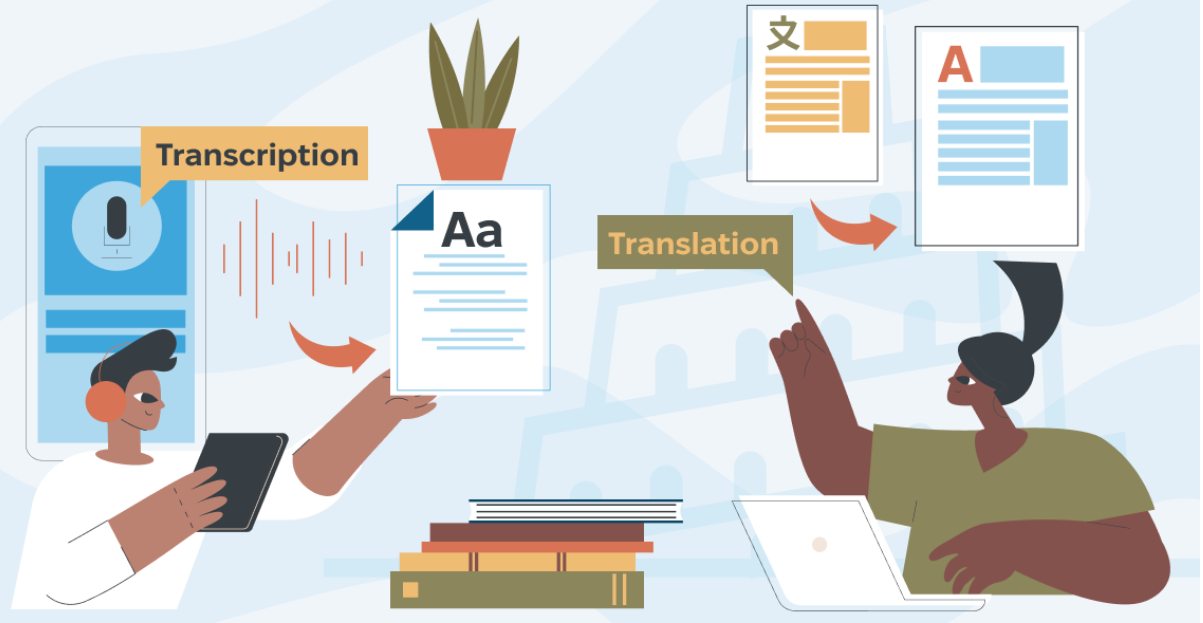
Translation vs. Transcription: What Is the Difference?

What Is Transliteration? How It Differs From Translation and Transcription